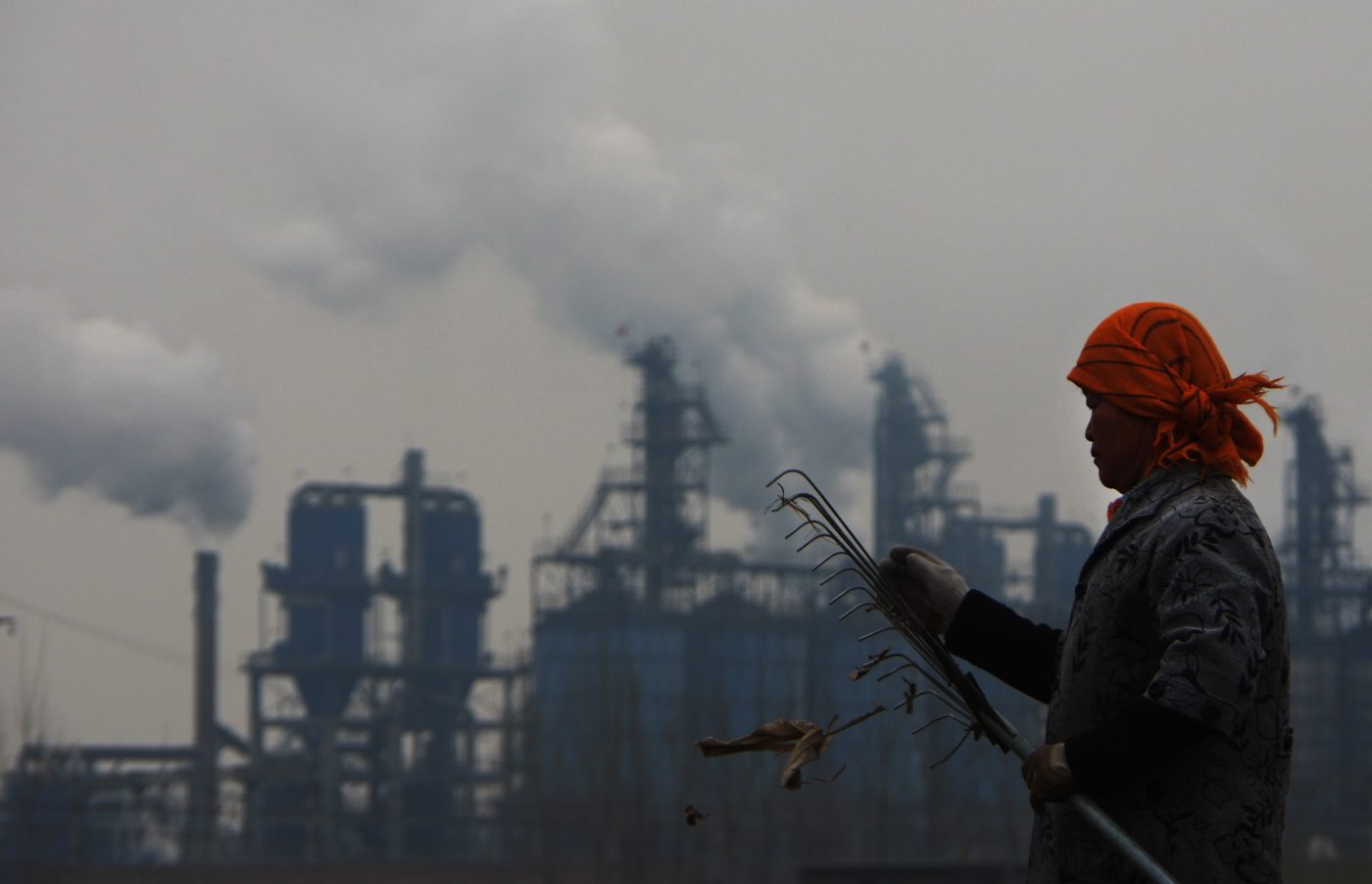
Aircraft and balloons inject aerosols into the atmosphere, dispersing sulfur dioxide and cooling a warming planet. Ships and drones spray seawater particles into low-lying ocean clouds to brighten them, sending more sunlight back into space and reducing global temperatures. Airplanes seed clouds to spark rainfall over parched land.
Although such technologies were long dismissed as speculative distractions from the immediate, pressing goal of cutting carbon emissions, governments are exploring them as a “plan B.” Marine cloud brightening — the term for spraying seawater particles into clouds — could reduce global temperatures within a year at costs in the tens of billions, far less than the trillions required for comprehensive decarbonization. Other geoengineering gambits could help mitigate the impact of climate warming.
But the new technologies are not risk-free. Potential side effects include disrupted rainfall in monsoon regions, damage to the ozone layer, and risks of rapid rebound warming if programs are suddenly stopped. A recent modelling study found that marine cloud brightening could harm the global ozone layer that shields living beings from harmful ultraviolet radiation.
The political damage could also be significant. Iranian political leaders have accused Israel and others of causing drought by “stealing” its precipitation. China falsely claimed that Maui’s 2023 wildfires were caused by a malfunctioning US “weather weapon,” according to the Council on Strategic Risks. In the US, there are local objections to the use of cloud seeding.
A “free driver” problem adds to concerns: one country’s deployment of new tech risks global consequences. If a state launches a stratospheric aerosol program unilaterally, neighbors suffering from altered rainfall or crop failures might interpret it as a hostile act. Scenarios of geoengineering wars, where states sabotage interventions or deploy countermeasures, are now a part of defense discourse. Technologies intended as planetary insurance could instead trigger conflict.
Instead of regulations that would reassure worried publics, a governance vacuum exists. International law fails to regulate most solar radiation techniques. The London Convention addresses ocean fertilization, and the Convention on Biological Diversity issued guidance in 2010 discouraging large-scale geoengineering without risk assessment. The UN Environment Assembly attempted to address selected issues but stopped short of binding measures.
The absence of agreed norms leaves a legal grey zone — dividing the globe’s major powers. The US has cautiously endorsed transparency, with the White House Office of Science and Technology Policy emphasizing that research must be accompanied by governance standards. The European Union remains resistant to funding solar geoengineering, focusing instead on cutting emissions. Russia is untransparent, and its infamous weather control experiments date back to the Soviet Union. EU-US cooperation is critical to ensure that democracies maintain the leading edge on geoengineering technology.
China looks like the current global leader in geoengineering innovation. It has invested heavily in weather modification programs and in 2020 announced plans to expand cloud seeding to cover half of its territory with artificial rain as soon as this year. It has also built one of the world’s largest geoengineering research programs. Its trials of highly reflective roofs on buildings were able to lower local surface temperatures by more than one degree Celsius.
Diplomatic options are emerging. Some scientists and advocacy groups call for a global moratorium on geoengineering deployment until governance rules are established. Others urge the UN to develop a treaty defining permissible research, transparency, and liability. NATO, too, could factor geoengineering into its climate security assessment. The most urgent step is to create rules of the road before technology races ahead of diplomacy.
Geoengineering embodies both innovation and risk. The true hazard may not be simply rogue deployment but democratic disunity: if leading nations fail to establish coordinated norms, others may shape the rules of planetary alteration. The ability to alter the atmosphere or to brighten clouds is no longer hypothetical. It is technically within reach. But without governance, transparency, and cooperation, it is as likely to divide as to protect, destabilizing the world it seeks to save.
Maciej Filip Bukowski is the Head of the Energy and Resilience Program at the Casimir Pulaski Foundation in Warsaw and a non-resident fellow with the Center for European Policy Analysis (CEPA).
Bandwidth is CEPA’s online journal dedicated to advancing transatlantic cooperation on tech policy. All opinions expressed on Bandwidth are those of the author alone and may not represent those of the institutions they represent or the Center for European Policy Analysis. CEPA maintains a strict intellectual independence policy across all its projects and publications.
2025 CEPA Forum Tech & Security Conference
Explore the latest from the conference.