During a post-election debate on February 23, Friedrich Merz, Germany’s presumptive incoming Chancellor, said that his “absolute priority will be to strengthen Europe as quickly as possible so that, step by step, we can really achieve independence from the USA.”
This was a stunning statement from a man who has long been regarded as one of the most pro-American politicians in Germany. Merz’s sentiment is increasingly common on the European continent.
President Trump’s overtures to Russia have resulted in a growing chorus expressing concerns that the United States is no longer a reliable security partner for Europe. While the Trump administration, now into its second month in office, has not terminated ongoing military assistance to Ukraine, it has not announced any new packages of weapons and equipment for Kyiv either.
The uncertainty around the continued availability of American arms, plus a freeze on the State Department’s Foreign Military Financing program (although this has now been lifted), is further highlighting the risks of Europe being too dependent on America’s defense industry.
That the order books of American defense contractors are filled with deals from across the Atlantic cuts both ways, though. The flow of procurement funds from Europe to the United States can be a vulnerability, but it is also a powerful incentive for those firms to maintain their business.
The supply chains of Lockheed Martin, RTX, and Northrop Grumman all stretch into Europe as well. They depend on Europe not just for orders but for fulfillment. The F-35 supply chain, for example, spans all 50 states and numerous countries in Europe. It would be impossible to maintain F-35 production schedule without the contribution of industry in Europe and other US allies.
The same can be said about other key weapons too, such as the PAC-3 MSE air defense missile. The defense industrial relationship is more symbiotic than detractors suggest. A transatlantic breakdown in arms sales and defense industrial cooperation would be mutually assured destruction for both sides, not just Europe.
It would be politically deeply damaging for the Trump Administration to disrupt this relationship. The inevitable job losses in manufacturing are totally at odds with the president’s key campaign promises of building a strong economy, primarily around increased exports and “fair trade”.
US defense primes, already suffering stock losses, are certainly delivering this message to both the White House and Capitol Hill. The deteriorating global security environment over the past three years has been a boon to the defense industry, with US arms sales reaching a record $319bn last year, compared to just $138bn in 2021. Nobody in the United States would benefit from a reversal of that trend. The Trump Administration should want those figures to grow, and they still can.
The United States remains an indispensable arsenal for the free world. No other country can supply fifth generation stealth fighter jets, anti-radiation missiles, or ballistic missile interceptors in significant quantities.
Europe as a practical matter cannot develop these capabilities in short order. They must either buy from the United States or go without, and the war in Ukraine has demonstrated that going without isn’t an affordable option. But nor should President Trump assume that Europe is a captive market. To borrow a phrase often used in reference to the president himself, Merz’s comments on “independence” from the US should “be taken seriously, not literally”.
The United States has to reassure European allies that it remains committed to the NATO alliance and the security of the continent. Similarly, Europe and Canada need to live up to their promise to invest credibly in their own security. In 2014, that was a promise to spend 2% of GDP on defense, but today, that is no longer close to adequate, even with the US still playing an active role.
Merz’s Christian Democratic Union is reportedly already in discussion with the Social Democratic Party on amending Germany’s debt brake as part of a plan for a new €200bn ($210bn) special fund for defense. This could be used to finance both military aid for Ukraine and the Bundeswehr’s own requirements. The desire to funnel all those funds into European firms will be strong, but a more balanced approach would be the strategic course of action.
The European Union estimates the bloc’s additional defense spending needs at $500bn. EU finance ministers and their UK counterpart are discussing ways to borrow the money at the G20 meeting in Cape Town on February 26-27.
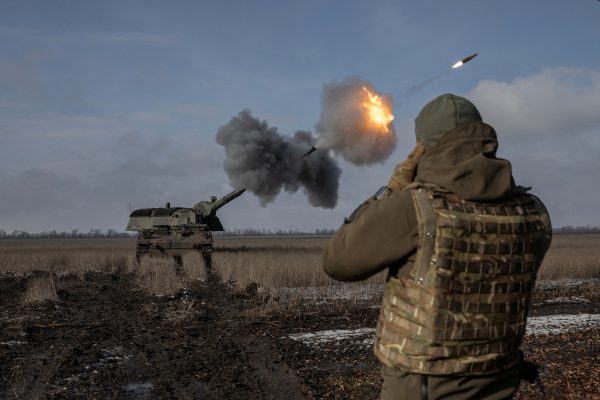
Ukraine will continue to need ammunition resupply from the US. Artillery shells, air defense interceptors, and GMLRS are just a few of the munitions that Ukraine will suffer without.
President Trump has said that he is willing to continue to sell arms to Ukraine if this is financed by Europe. Germany has already bought additional M142 HIMARS directly from US Army stocks for Ukraine. Norway continues to do the same with other defense capabilities.
These deals offer a means to shore up trilateral relations between the US, European NATO, and Ukraine. They can also deepen defense industrial cooperation, further increasing all parties’ vested interest in each other’s security. A PAC-2 GEM-T production line is already being established in Germany, which will produce missiles for European customers. This can be replicated for other in high-demand American systems that Ukraine and others on the continent need, like PAC-3 MSE and GMLRS.
Deepening defense industrial cooperation between the United States and Europe at this time of serious transatlantic tension may seem counterintuitive, but it is a more realistic approach than giving up on an alliance that has endured for 75 years.
Europe cannot replace the source of more than half of its arms overnight (and that reliance has been growing in recent years, not declining). To attempt to do so would create more problems than such a plan purports to solve.
If the EU follows Germany in affording members more flexibility in financing their national defenses, there will be sufficient money available to meet the new spending targets for NATO that will be set this year. Sufficient funds to increase Europe’s defense industrial strength would fund both sovereign programs and cooperative deals with the United States.
This is the model the alliance needs to endure for another 75 years. Europe and the US still need each other, even if it’s uncomfortable to admit it.
Colby Badhwar is a security columnist for The Insider, a Russia-focused, independent media outlet. He writes on global security issues, with an emphasis on armaments and the arms trade. He is a founding member of Tochnyi, a collaborative project covering the War in Ukraine with a weekly podcast, where his research and analysis can be heard. He resides in Toronto, Canada.
Europe’s Edge is CEPA’s online journal covering critical topics on the foreign policy docket across Europe and North America. All opinions expressed on Europe’s Edge are those of the author alone and may not represent those of the institutions they represent or the Center for European Policy Analysis. CEPA maintains a strict intellectual independence policy across all its projects and publications.

War Without End
Russia’s Shadow Warfare

CEPA Forum 2025
Explore CEPA’s flagship event.