Russia’s rapacious expansionism has made many European countries reconsider the strength and skills of their armed forces. But efforts to expand the size of the continent’s military are faltering, with young people often uninterested or outright resistant. There is now a real struggle to find additional personnel.
One answer is to restore conscription, an approach adopted by Lithuania and Sweden after the 2014 annexation of Crimea and war in Eastern Ukraine. Latvia followed suit after the 2022 full-scale invasion. And Croatia is reintroducing the draft this year.
The debate over compulsory military service is heated in Poland and Germany, and Boris Pistorius, the latter’s defense minister, has called on the army to make itself more attractive to young people. If the recruitment goals are not reached on a volunteer basis, the country might reestablish compulsory service, he said.
But experience from Ukraine and elsewhere suggests there may be other ways to tackle the issue.
Past recruitment methods will not work for the current generation. Instead of appealing to values or activities alien to people in their late teens and early 20s, officers may need to shift their focus to those who are more receptive. And high on the list of those needed are gamers.
There are more jobs than ever in the armed forces connected to technology, specifically drones, and recruiting those with a suitable background in screen-based skills will tap into an important resource while saving money and time on training.
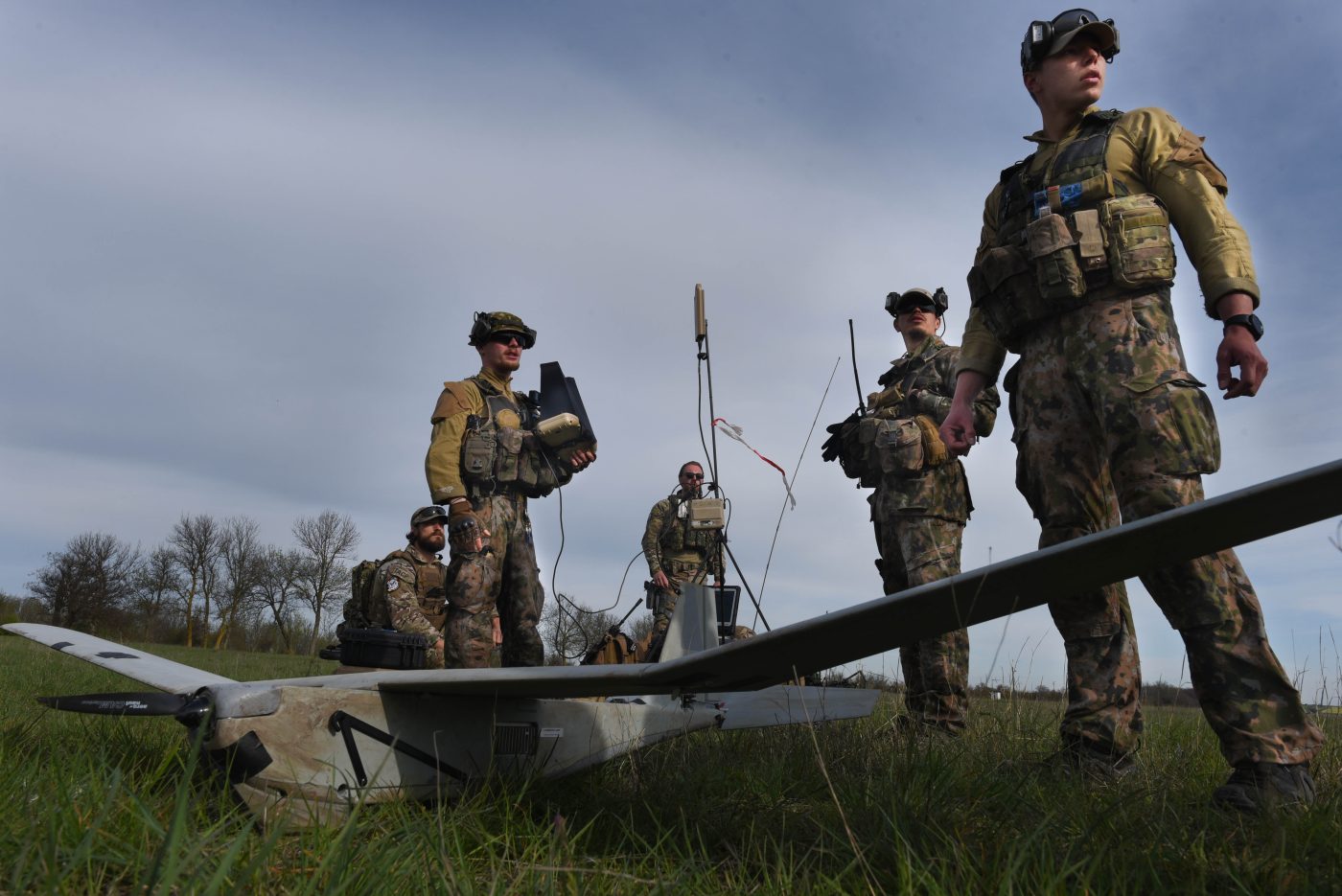
Drones have changed modern war, making it deadlier than ever. They help in both surveillance and attack, and drastically decrease the price of strikes, making those who operate them key personnel. That’s underlined by increasing frontline efforts in Ukraine to single out unmanned aerial vehicle (UAV) operators as high-value targets.
Both Moscow and Kyiv have heavily invested in drone development and manufacture, allowing them to hit enemy targets with high precision deep behind the frontlines.
Consequently, there is a need to recruit drone operators. Gamers are a key target for these campaigns since they need less training. Dariia, callsign “DSHK”, head of “the Harpies,” a woman-only Ukrainian UAV unit, says most of the operators in her unit have a computer gaming background.
Meanwhile, Russia is teaching schoolchildren to operate drones and spent almost 540m rubles ($6.9m) on UAV training for pupils in 2024. Ukraine has also added drone navigation to its the school program.
And such moves are replicated around the world. The US military engages with teenagers via video games and gives generous funding for shooter simulators, building recruitment despite ethics questions from some veterans’ groups. China is also cultivating teenage interest in drone sports, equipping them with skills that can be transferred to military use.
In contrast, European countries are lagging behind. Drone training is not promoted in the same way, and video games are not cultivated as a route into the military, while attempts to make the army more appealing to young people appear to leave many indifferent.
The issue has to be addressed, and universal military training is now a matter of necessity, according to Jan Kallberg, a CEPA senior defense and security fellow. By training more people, countries will create a pool of reservists who can be called in to fight without missing a beat.
A requirement to join the reserve could also break the social perception of war as a risk taken only by those with no other choice, he said.
The generation currently reaching adulthood are less attached to nation-states and disconnected from military values, with many seeing military service as a constraint to personal development. Most young people in the West and their parents have lived at arms-length from war and its horrors, resulting in a shift in mentality that cannot easily be changed. Only around a third of the population would fight to defend their country in Britain and France, and just 14% in Italy, although there’s some polling evidence the number is rising as the threat rises.
Targeting gamers is not a panacea, and fostering positive attitudes to military service and the shared values of society among young people is also vital (see Norway for evidence of how this can work). But identifying and developing individuals with the necessary technical and motor skills would help armies find specialists suitable for crucial positions.
Drone training in schools would also help to portray military service as interesting and exciting. Investment in video games and interaction with their audience may, as a result, pay off in the form of new recruits.
There is no universal solution to fix the recruitment crisis, but Europe needs to catch up with Russia, China, and the US, where military consciousness is actively cultivated, and gamers could hold the key.
Mykyta Vorobiov is a Ukrainian political adviser, journalist, and political science student at Bard College Berlin. For the last two years, he has been developing articles on politics and law for CEPA, VoxEurop, JURIST, and others.
Europe’s Edge is CEPA’s online journal covering critical topics on the foreign policy docket across Europe and North America. All opinions expressed on Europe’s Edge are those of the author alone and may not represent those of the institutions they represent or the Center for European Policy Analysis. CEPA maintains a strict intellectual independence policy across all its projects and publications.

War Without End
Russia’s Shadow Warfare

CEPA Forum 2025
Explore CEPA’s flagship event.