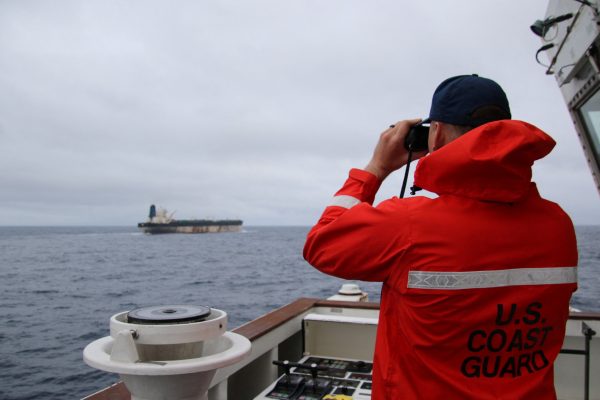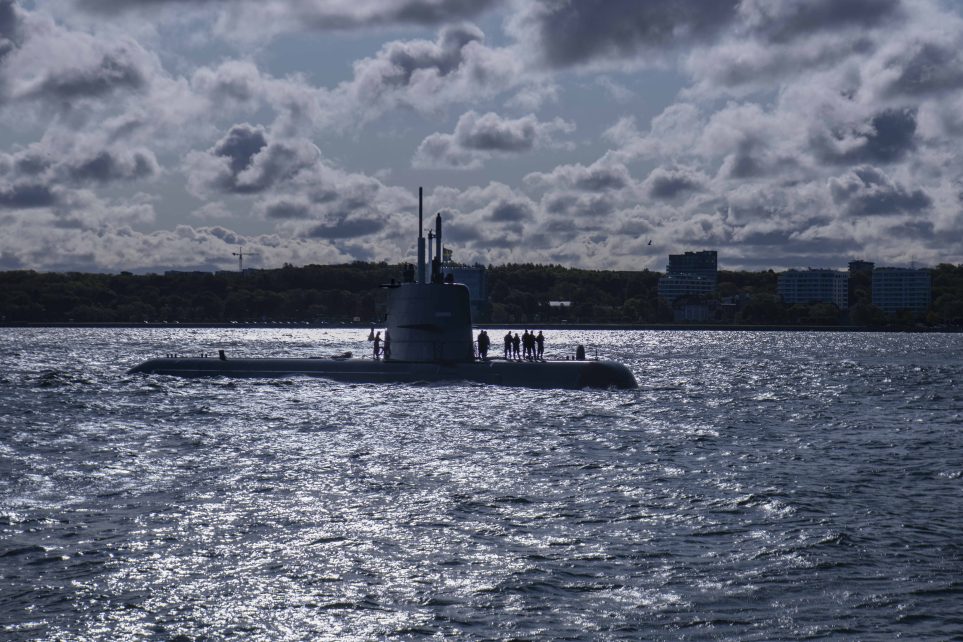
Keeping the lights on should be a matter of course in a well-run country. But a two-hour power cut on the Swedish island of Gotland on August 23rd was not just embarrassing, but sinister. Observers were quick to wonder if a dragged anchor was behind the outage. Such incidents have damaged telecoms and power cables on the Baltic seabed alarmingly often.
The power company, Geab, insists that a technical fault on the mainland was to blame. But questions remain. How could the strategically important island, of intense interest to Russian intelligence services, be so vulnerable to such a glitch? Why was Geab so slow to fix the problem and to inform the public? More broadly, why is Sweden so bad at dealing with sabotage attempts on its critical infrastructure?
A previous incident in March hit the island’s water supply. Someone, armed with technical knowledge, broke into an electrical cabinet and unplugged a pump. No suspect has been identified, let alone caught.
It is a similar story with a series of attacks on cables and fuse boxes in the run-up to the Easter weekend at around 30 telecom masts located along the E22 highway on Sweden’s east coast. The disruption to services was limited. But so too was the official response. As with the attack on the waterworks in Gotland (and on other water supply installations), the police investigation seems to have gone nowhere. But why? Witnesses can be questioned, CCTV footage examined, rewards offered for information. Nobody seems to have a grip on the issue.
“Sweden is not reacting swiftly enough to grasp the challenge,” says Patrik Oksanen, a security expert and member of the Swedish Royal Academy of War Sciences. The country’s decentralized system of public administration is not suited for modern conditions: raging sub-threshold warfare. Sometimes responsibilities overlap, leading to paralysis. Or they do not, and the issue falls between the cracks: local government, utilities managers, the police and counter-intelligence services. The people who run local infrastructure systems do not (to put it mildly) see the world through a national security lens. If the damage is slight, an incident is not a priority for the police. It could just be hooliganism or happenstance. Strict laws on data privacy prevent the “needle-in-a-haystack” surveillance operations that can be more easily authorised in countries like Britain. Even comprehensive data on the number of incidents is lacking.
The physical side of these attacks is only part of the picture. Russia—the most likely perpetrator—also uses psychological warfare. In February, someone systematically spread online rumors about unsafe drinking water in the central Swedish city of Östersund. This was a carefully chosen target: in 2010, residents there suffered the country’s worst outbreak of waterborne contamination in thirty years when the cryptospiridium parasite reached drinking water. Memories of real fear and inconvenience, and mistrust of the authorities, are fertile ground for disinformation.
Other countries are more robust. The Norwegian authorities have just publicly blamed Russia for a cyber-attack on a dam in Bremanger in the west of the country in April. This is a first for Norway. The head of the PST security police, Beate Gangås, also talked about motive, saying the attack aimed “to cause fear and chaos.”
That is better than the Swedish response, which seems to be to say and do nothing, at least in public. In the short term, it is indeed tempting not to panic the public. Officials may need some time to work out what is happening and mull over effective responses. But systematic inaction and obfuscation soon display weakness and sow mistrust. That is just what the Kremlin wants.
Europe’s Edge is CEPA’s online journal covering critical topics on the foreign policy docket across Europe and North America. All opinions expressed on Europe’s Edge are those of the author alone and may not represent those of the institutions they represent or the Center for European Policy Analysis. CEPA maintains a strict intellectual independence policy across all its projects and publications.

War Without End
Russia’s Shadow Warfare

CEPA Forum 2025
Explore CEPA’s flagship event.