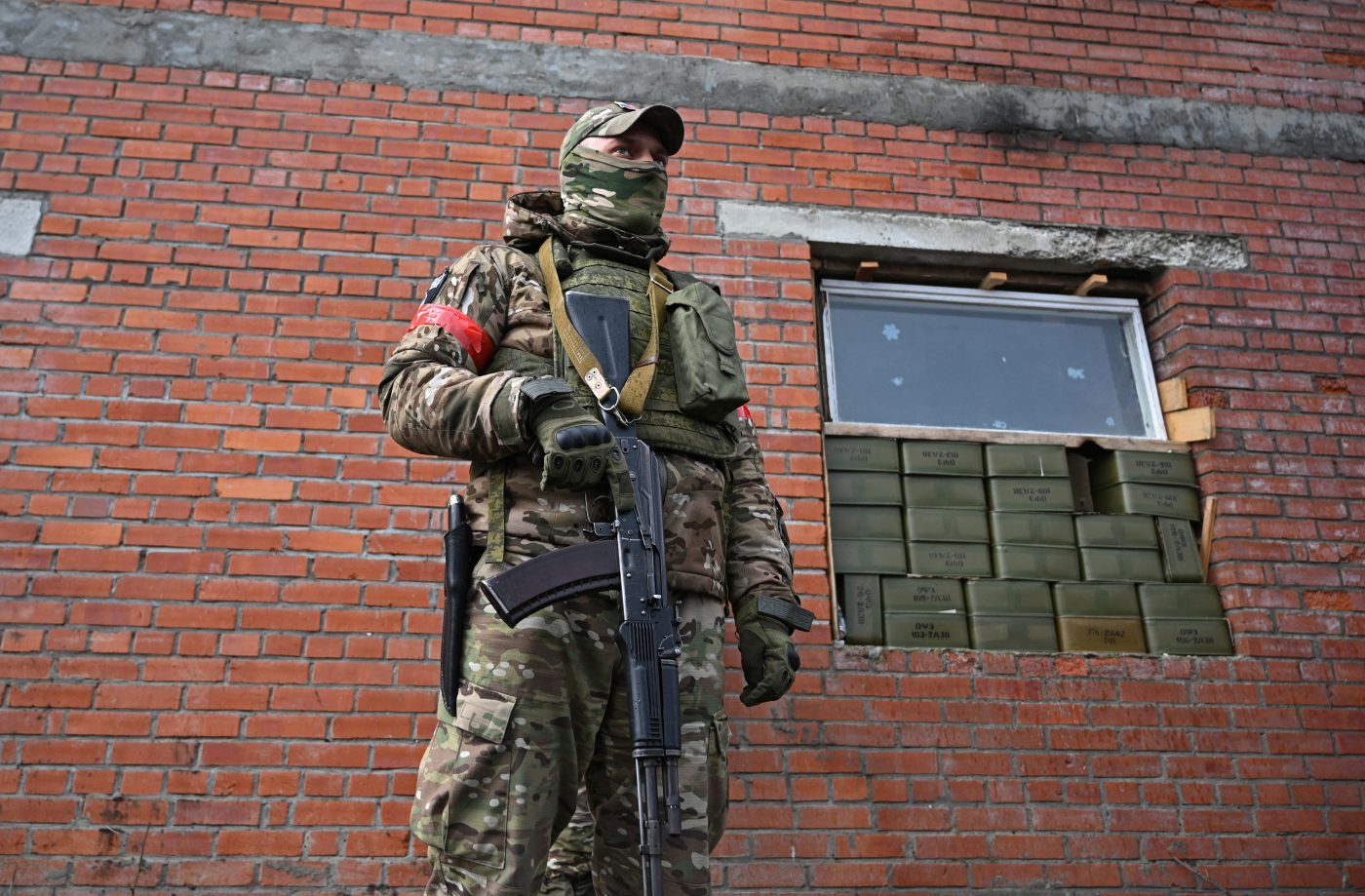
The 2025 budget, which sets a new post-Soviet record for military spending, shows the Russian economy has effectively transitioned to a war footing. The Kremlin plans for 40% of expenditure for defense and security, much more than for education, health, and social spending combined.
The results of this spending shift are becoming more obvious, and the costs are high.
Inflation is rocketing, and even pro-Kremlin news sources have been unable to deny what their readers and viewers see every day.
In November, butter became so expensive that shoppers began recording protest videos and filing mass appeals to antitrust authorities, resulting in an inspection of producers by the Federal Antimonopoly Service (FAS).
Butter inflation was not only covered by opposition media, but by state media too, especially regional outlets. State television in the Republic of Dagestan reported butter prices had risen 20% in nine months, blaming higher production costs, high interest rates, labor shortages, problems servicing foreign equipment, and the increasing cost of raw materials and logistics.
This limited outbreak of free speech didn’t last long. The head of the Federation Council’s Agrarian Committee, Aleksandr Dvoynykh, called for an end to the complaints, claiming it only spurred prices. And shortly before New Year, Vladimir Putin blamed Russians for eating too much butter and said prices had risen because demand had outstripped supply.
It’s not just butter. Last spring, surveys showed 54% of respondents considered rising prices more of a problem than the war in Ukraine or terrorism. In December, 77% of Russians cited the sharp rise in prices as the biggest disappointment of the year.
Officially, inflation stands at 9.5%, though even media supportive of President Vladimir Putin admit the true figures are much higher. Given the weakness of the ruble, they will only continue to grow.
And the impact is being felt by the most vulnerable Russians, not least because the cost of basic food products has led the charge. The price of eggs has risen by 61% since the full-scale invasion, and bananas by nearly 50%. At the same time, the cost of new construction has increased by 90%.
An analysis of Russian shopping baskets by ROMIR, a Moscow-based research institute, found inflation was 87% between the beginning of 2022 and September 2024. The estimate, based on a comparison of household store receipts, helps explain why ordinary Russians are braving the risks of speaking out to voice their discontent.
The official response to rising prices like butter (see above) demonstrates that the state will continue to see war financing as a greater priority than quelling inflation. In September, exiled Russian economist Igor Lipsitz predicted: “Russia will find money for the war but not for anything else.”
Fellow economists Sergey Aleksashenko, Vladislav Inozemtsev, and Dmitriy Nekrasov came to a similar conclusion in a report for the Center for Analysis and Strategies in Europe. They argue that inflation has become the “new norm” for the Russian economy.
“By the end of 2024 the Russian government lost any fear of the negative economic consequences of the war,” they wrote, noting that the economy is “hooked on military spending,” and this focus will not disappear even after the end of hostilities, at great cost to the Russian people.
Observers point to the colossal spending on the war in Ukraine as one of the causes of higher prices. Incomes, especially for the families of front-line soldiers, grew, but many have been left behind by a hurricane of economic headwinds created by the conflict.
Local suppliers sought to fill the gaps left by Western companies, which quit Russia after the full-scale invasion, but quickly came up against resource restraints, acute labor shortages, and limited production capacity.
Businesses then began to transfer their increased costs to higher prices, further fueling the inflationary spiral. Economists warn prices will continue to rise while the quality of goods will decline. Military production is also affected, despite large budgetary infusions.
Last summer, Deputy Prime Minister Denis Manturov admitted defense companies were short of approximately 160,000 specialists, despite a strong influx of staff from civilian industries. Delays in government payments have also exacerbated their cash flow problems.
Vladimir Boglayev, Director of the Cherepovets Foundry and Mechanical Plant, which provides parts and machinery to the military, said in November the situation is “critical,” revealing that “deliveries for Rosoboronzakaz [the Federal Service for Defense Contracts] have not been paid for over a year.”
Officials and propagandists hold the Bank of Russia primarily responsible for this situation. In common with most central banks, it uses interest rates as a tool to control inflation and announced in December that the benchmark rate would stay at 21%. Economists warn this approach is not having the desired effect.
It looks increasingly likely that the head of the Central Bank, Elvira Nabiullina, will have to come to terms with the government abandoning the goal of containing inflation in order to fuel its war machine. The people of Russia will pay the price.
Kseniya Kirillova is an analyst focused on Russian society, mentality, propaganda, and foreign policy. The author of numerous articles for CEPA and the Jamestown Foundation, she has also written for the Atlantic Council, Stratfor, and others.
Europe’s Edge is CEPA’s online journal covering critical topics on the foreign policy docket across Europe and North America. All opinions expressed on Europe’s Edge are those of the author alone and may not represent those of the institutions they represent or the Center for European Policy Analysis. CEPA maintains a strict intellectual independence policy across all its projects and publications.

War Without End
Russia’s Shadow Warfare

CEPA Forum 2025
Explore CEPA’s flagship event.