Slowly, very slowly, Europe is weaning itself off its addiction to cheap Russian energy and all its associated costs, including repeated blackmail and supply cuts whenever it suits the Kremlin.
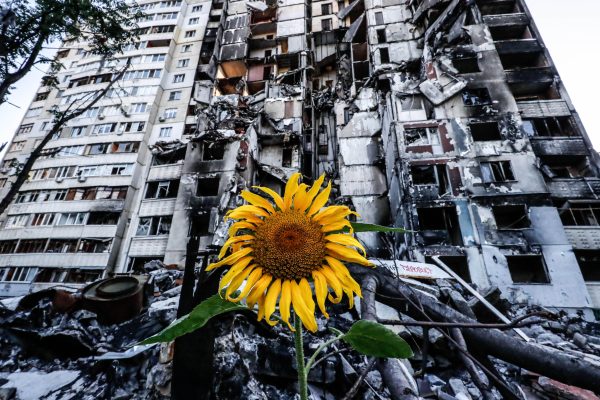
It’s been greatly aided by Ukraine, which previously made money from transiting Russia’s oil and gas, but which has a keener understanding of Russian malevolence. Tens of thousands of dead and a landscape of ruined cities will do that for you.
But like shaking heroin users suffering withdrawal symptoms, Russia’s energy addicts are screaming from the corner of the room. Just one more contract, they demand, and everything will be different.
It’s not hard to discern these energy junkies. Hungary and Slovakia are banging the European Union (EU) table and demanding it pressure Ukraine to resume gas shipments. There is absolutely no need for this; Slovakia can find energy elsewhere, but meanwhile, approximately $520m in transit fees (whose beneficiaries are somewhat murky) have been lost.
On January 27, Hungary lifted its blockage of an extension of EU sanctions. It had threatened to veto the decision, which would have led to the unblocking of more than $200bn of Russian assets currently frozen in the EU. It demanded that the Russian oil transit through Ukraine be preserved; reports said the Commission had agreed to “approach Ukraine to request assurances regarding the maintenance of oil pipeline transfers to the EU”.
This is an act of self-harm. The EU must better understand the damage this is doing through European payments into the Kremlin’s war chest and by damaging its own commitment to end Russian energy imports by the end of 2027.
The supposedly temporary EU waiver for land-locked Central European countries (Hungary, Slovakia, and the Czech Republic) to import Russian oil has not only contributed around €6bn ($6.2bn) to the Russian budget annually but also undermined European unity and solidarity on supporting Ukraine.
The EU’s path forward is clear. It must stop ignoring the bluffs of Russia and its friends, and fully enforce sanctions. This means eliminating all exemptions, banning the re-export of Russian-refined petroleum products, and sanctioning Russian oil companies such as Lukoil, which exploit embargo loopholes to keep crude flowing into Europe.
Europe can make do without Russian oil. Hungary and Slovakia are no exceptions. Both countries have consistently secured exemptions from the EU ban on Russian oil imports, claiming that stopping Russian oil is technically difficult and economically damaging. Both arguments are untrue.
Since the introduction of the EU ban on Russian oil imports on 5 December 2022, Russia has continued to sell about 12-14 million tons of oil via the southern part of the Druzhba pipeline, which runs through Ukraine. Last year, about 4.8 million tons were delivered to Hungary, 4.6 million tons to Slovakia, and 2.7 million tons to the Czech Republic.
The three energy addicts have done little to diversify their supply. Instead, they have increased their reliance. Hungary’s dependence on Russian oil has risen from 50% to over 60% since the invasion. Slovakia remains fully dependent.
The real reason for the Hungarian and Slovak campaigns? Money.
The Hungarian state-controlled oil company, MOL, has a lucrative deal with Lukoil. MOL has been profiting handsomely from buying Russian crude at around a 20% discount, and then selling petroleum products at prices close to the EU average.
Hungary, Slovakia, and the Czech Republic have viable alternative supply options, as the Center for the Study of Democracy has highlighted. That was made clear in 2019 when the Druzhba pipeline had to be closed because of contaminated products; the affected countries adapted by tapping reserves and securing alternative supplies.
The Adria pipeline from Croatia’s Omisalj terminal can deliver 400,000 barrels per day, enough to cover regional demand at 80% utilization, with drag-reducing agents capable of boosting capacity further. In May 2024, MOL sourced nearly 200,000 tons of non-Russian oil via Croatia — about a third of Hungary and Slovakia’s imports that month.
The Transalpine pipeline from Italy to Austria, South Germany, and the Czech Republic provides another alternative. Meanwhile, linking Austria’s refinery near Vienna to Slovakia’s refinery in Bratislava would take minimal investment — ironically, a past project to connect them for Russian crude can now serve for non-Russian oil.
And yet Hungary insists on buying more Russian oil. MOL has seen its profits hit record levels, which is good news for the economically hard-pressed government of Viktor Orbán. The company pays a windfall tax, initially set at 40% and later raised to 95%. This money channels substantial revenue into the utility protection fund that finances domestic energy subsidies and social programs.
The latter funding streams have helped Orban maintain popular support at the ballot box, a tactic he has perfected over the last 15 years. And it lessens his urgency to reach an agreement with the EU on democratic reforms; reforms that would release around $20bn in suspended funds.
Ending Russian oil supplies is not just about Ukraine — it’s about securing Europe’s economic future and reinforcing the transatlantic alliance. True security and prosperity depend on a strong and united response to Russian aggression, one that severs Europe’s toxic dependence on Kremlin-controlled energy once and for all.
Sergiy Makogon is a Non-resident Senior Fellow at the Center for European Policy Analysis (CEPA.) He is a seasoned executive and energy expert with over 20 years of expertise in the Ukrainian and Central and Eastern European (CEE) gas markets, as well as European security.
Martin Vladimirov is Director of the Energy and Climate Program at the Center for the Study of Democracy in Sofia.
Europe’s Edge is CEPA’s online journal covering critical topics on the foreign policy docket across Europe and North America. All opinions expressed on Europe’s Edge are those of the author alone and may not represent those of the institutions they represent or the Center for European Policy Analysis. CEPA maintains a strict intellectual independence policy across all its projects and publications.

War Without End
Russia’s Shadow Warfare

CEPA Forum 2025
Explore CEPA’s flagship event.