
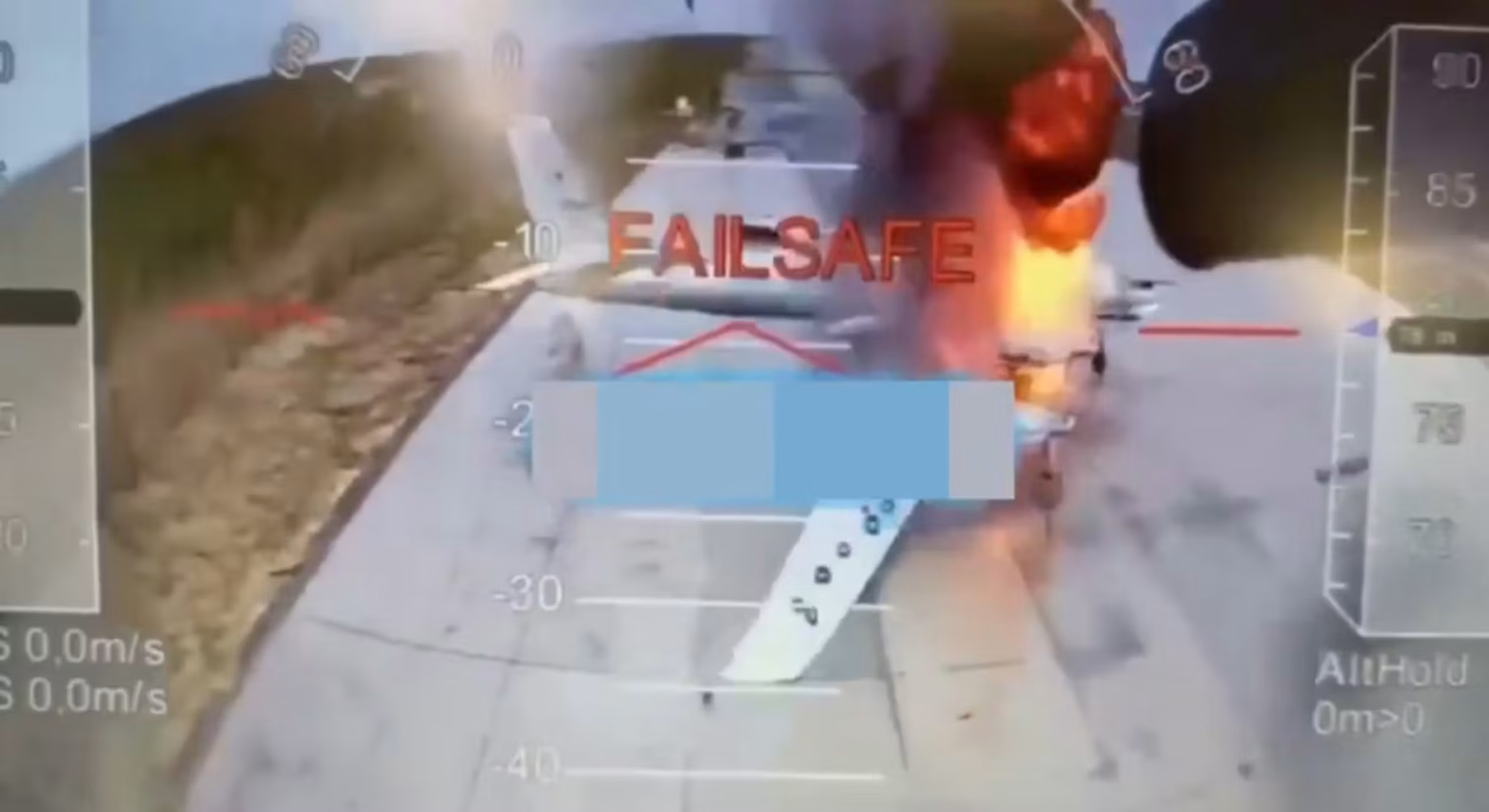
It may not have changed the course of the war. But it may speed its end. Already, Ukraine’s stunning strike on Russian air bases has changed the way we think about Vladimir Putin’s invasion of Ukraine—and, indeed, about all wars in the future. Battered, beleaguered, tired, and outnumbered, Ukrainians have, at minimal cost, in complete secrecy, and over vast distances, destroyed or damaged dozens, perhaps more, of Russia’s strategic bombers.
These huge, $100m planes and the cruise missiles they launch are the backbone of Russia’s nightly assaults on Ukraine’s cities. A legacy of the Soviet Union’s arsenal, these warplanes are, in the short and medium term, irreplaceable. “Hit the archer, not the arrow” is the central military precept in air defense. Ukrainians have done just that.
Some compare this with Imperial Japan’s surprise attack on the US Navy at Pearl Harbor in December 1941. But the achievement here is far greater. The US was at peace. Russia is supposedly on high alert. The $600 drones were, apparently, concealed in wooden sheds carried on trucks, with unwitting delivery drivers simply following routine instructions. The logistical base was a warehouse near the border with Kazakhstan—next to the local headquarters of Russia’s FSB security service. In other words, Ukraine was able to run a complicated sabotage operation deep inside enemy territory with flawless security.
The Ukrainian operation was, we are told, eighteen months in the planning (and more surprises may yet be in store). Russian military aviation planners will hurry to find hardened bunkers for their remaining warplanes. But so much of an advanced society’s life happens in the open air. What about civilian airliners sitting at airports? Or critical infrastructure? Or Kremlin villas (and the cronies who live in them)? Soldiers on the frontline have gotten used to fearing the deadly hum of a drone. Now, others will, too. Even the FSB cannot search every truck and every cargo.
Russian planners will doubtless learn lessons from this and try similar stunts in Ukraine now or against NATO later. Western planners should be worrying about that. Meanwhile ,Russian spin doctors are in contortions trying to make sense of the audacious, successful operation. It may also impress the commander-in-chief in the White House. He likes winners. Putin now looks like a loser, humiliated by a smaller, weaker country.
The asymmetry is striking. When Russia ignores calls for a ceasefire and steps up its offensive, it kills civilians. When Ukraine responds, it destroys part of Russia’s nuclear triad—whose ultimate aim is the United States and its allies.
Instead of slow-boating discussions about Ukraine’s entry into NATO, Western countries should be hurrying to ask their friends in Kyiv for defense and security assistance against Russia. In the meantime, they should send money. Ukrainians have shown that they can develop in months, cheaply and effectively, capabilities that Western countries, at vast expense, fail to build in decades. If Ukrainians can do this alone, how much more could they do with serious Western help?
The immediate effect is in the war of narratives. Ukraine has given a clear answer to Donald Trump’s taunt, “You don’t have the cards.” Not only has it shown new capabilities but also it deployed them without the help, consent, or even knowledge of its Western supporters. The parallel here is with Israel. Just as the Jewish state hunted down Nazi war criminals for decades, Russia’s torturers, child kidnappers, prisoner-murderers, and rapists will live in fear for the rest of their lives. Their commanders may start thinking differently, too. From Russia’s high north to Siberia and beyond, nobody and nothing in Russia is now safe.
Edward Lucas is a Senior Fellow and Senior Advisor at the Center for European Policy Analysis (CEPA).
Europe’s Edge is CEPA’s online journal covering critical topics on the foreign policy docket across Europe and North America. All opinions expressed on Europe’s Edge are those of the author alone and may not represent those of the institutions they represent or the Center for European Policy Analysis. CEPA maintains a strict intellectual independence policy across all its projects and publications.

Ukraine 2036
How Today’s Investments Will Shape Tomorrow’s Security

CEPA Forum 2025
Explore CEPA’s flagship event.


