If the intensity of military action does not rise sharply, and the price of oil does not fall, the Russian treasury can sustain the current level of military expenditure for a long time, economists said earlier this year.
President Vladimir Putin’s government approved a draft three-year budget at the beginning of October which includes record military spending of 13.5tn rubles ($141.2bn), or 6.3% of GDP. This is more than the planned funding for education, healthcare, social services and the national economy combined.
At the same time, many observers expect actual expenditure will exceed what is planned. This year, due to the growth of military output and inflation, Russian budget revenue was met ahead of schedule this year, allowing for an increase in spending.
The government is currently trying to distribute 2.7tn rubles of additional budget expenditure for 2024, most of which will be spent on the war, according to commentator Boris Grozovskiy.
But a problem for the Kremlin is that however much money is poured in, there are limits on Russia’s capacity for military production. Tank factories are already operating at the limit of their capacity for example, according to Maksim Blunt, economic observer for Radio Liberty.
The Russian labor market is short of about two million people, according to economist Igor Lipshitz, and higher taxes to pay for the war mean people will have less money to buy goods and services, decreasing domestic demand and slowing economic growth.
No-one should underestimate Moscow’s ability to finance the war, however, and Putin’s regime has plans to increase the incentives for Russians to go to the frontline.
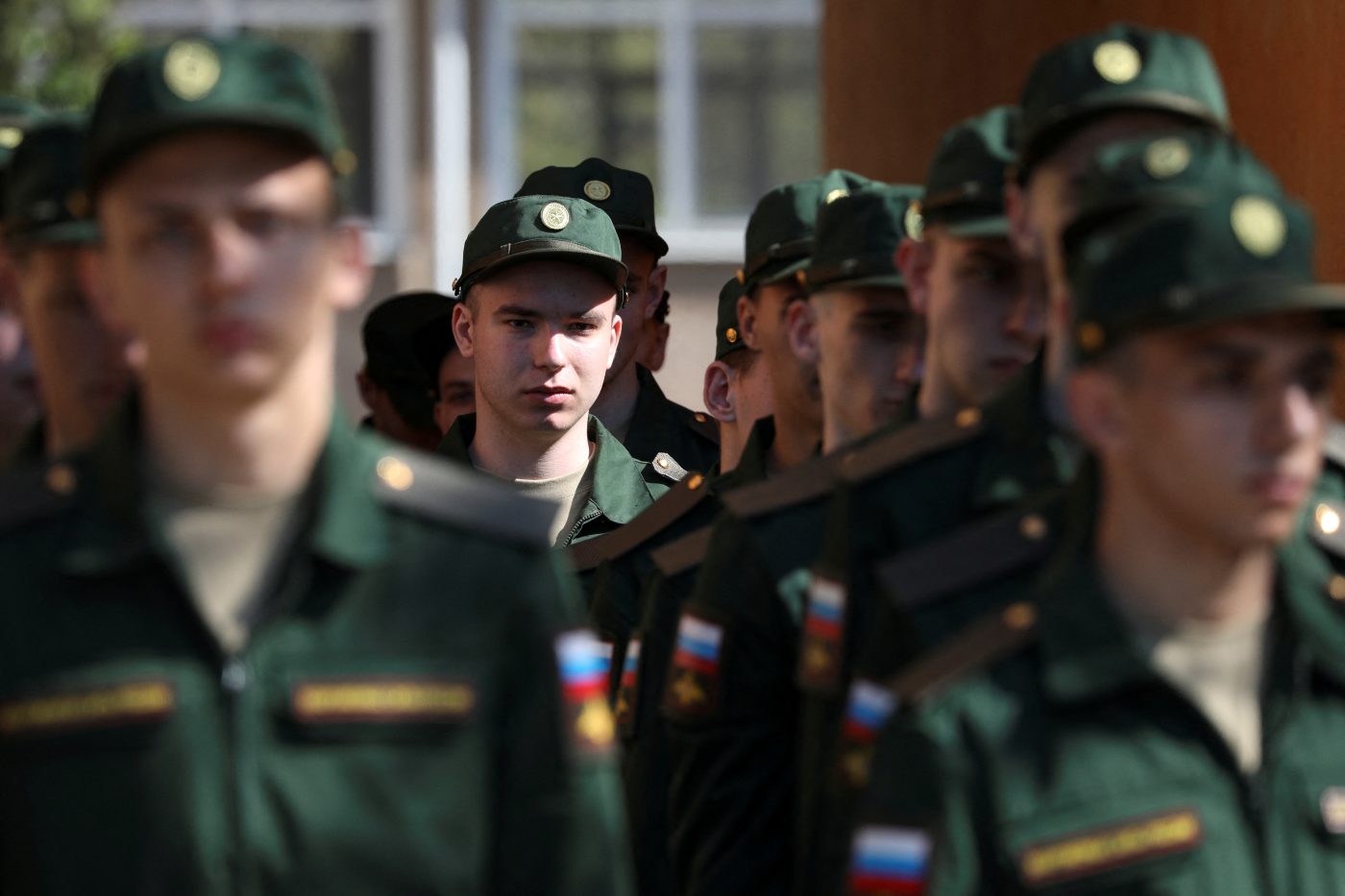
The Kremlin plans to recruit at least 225,000 soldiers under contract in the next three years, according to the draft budget, tempting them into service with a one-time federal payment of 400,000 rubles ($4,180) for signing up.
Despite the offer of extra cash, there is still a shortage of young people in the Russian army. Some have already died or been injured in combat, while others have left the country.
Most young people also lack the most common incentives to risk their lives as they don’t have mortgages to pay or families to support.
As a result, at least half the soldiers who have signed up under contract are older, impacting their effectiveness, researchers have noted. Commanders complain that those older than 45 cannot cope with carrying heavy backpacks or digging trenches and are unable to run quickly with heavy weapons, affecting combat operations.
One way the Kremlin is trying to compensate for the shortage of personnel is by looking abroad. They are not only recruiting foreign mercenaries, but also seeking foreign workers to help with the assembly of munitions.
Russia tricked 200 women from Asia and Africa into assembling Shahed drones in Tatarstan, Novaya Gazeta reported. The women were promised education and work in the hospitality industry or catering and only learned on arrival that they would be working 12-hour shifts on low pay to make weapons to attack Ukraine.
The search for manpower comes as popular support for the invasion appears to be waning. Nearly half of Russians now see more harm than good in the war, according to a survey published in October. It also found 54% in favor of negotiations, while 72% of respondents said they would support Putin if he decided to end the conflict.
The Kremlin’s response is to encourage young men to sign up by showing that veterans are the new Russian elite. In October, Putin appointed Artem Zhoga, former commander of the Sparta battalion, as an envoy to the Urals Federal District.
The appointment was reward for Zhoga and his son fighting for the separation of Donbas from Ukraine since 2014. While it was intended to show that veterans are being integrated into the regime’s inner circle, many observers have suggested their true prospects are not so bright.
Kseniya Kirillova is an analyst focused on Russian society, mentality, propaganda, and foreign policy. The author of numerous articles for CEPA and the Jamestown Foundation, she has also written for the Atlantic Council, Stratfor, and others.
Europe’s Edge is CEPA’s online journal covering critical topics on the foreign policy docket across Europe and North America. All opinions expressed on Europe’s Edge are those of the author alone and may not represent those of the institutions they represent or the Center for European Policy Analysis. CEPA maintains a strict intellectual independence policy across all its projects and publications.

War Without End
Russia’s Shadow Warfare

CEPA Forum 2025
Explore CEPA’s flagship event.