After three years and a million casualties, Russia has discovered something that even the ancient Romans knew: combining different types of weapons creates a synergy more lethal than the sum of its parts.
Russia has devised a successful approach for penetrating Ukrainian defenses. The good news? In the early months of 2025, Ukraine may have discovered a response.
Here’s the problem. By combining ground assaults with artillery and glide bombs, as well as drones in what British experts call an “offensive triangle,” Russia has been able to make small but steady gains in 2024 by placing Ukrainian troops in an untenable position.
“First, the AFRF [Russian armed forces] continue to pin down Ukrainian ground forces on the line of contact with infantry and mechanized forces,” according to a study by the Royal United Services Institute (RUSI), a British think tank. “Second, they prevent maneuver and inflict attrition with first-person view (FPV) drones, Lancet drones, and artillery firing both high-explosive shells and scatterable mines.”
“Third, the AFRF has increased its use of UMPK glide bombs against Ukrainian forces who are holding defensive positions,” RUSI said. This “creates a competing dilemma: should the AFU [Ukrainian armed forces] hold and invest in static defensive positions to reduce attrition from FPVs and drone-enabled artillery, or retain mobility to avoid destruction from glide bomb strikes, which have the explosive yield to demolish or bury even well-prepared fortifications?”
It is a crude approach that has neither given Russia a decisive victory nor spared it from losing more than 1,000-plus soldiers per day. But as the Romans would have agreed, success in war is more important than subtlety. Russia captured close to 4,000 square kilometers (1,500 square miles) in 2024, its greatest gains since the early days of the Russian invasion in February 2022.
In terms of combat proficiency, Russian ground troops don’t seem much better than in 2022, while artillery — now supplemented by drones — has always provided the bulk of Russian firepower. The new factor in Russia’s tactical equation is airpower. The Russian Air Force proved a major disappointment for most of the war, deterred by Ukrainian air defenses from providing desperately needed close air support to the ground troops.
The solution to resurrecting Russian airpower proved simple and lethal: glide bombs. By affixing its own satellite guidance system and wings to its huge Cold War stockpile of unguided “dumb bombs,” Russia created a cheap smart bomb that can dropped from up to 60 miles behind the front line.
This keeps Russian aircraft safely out of range of Ukrainian anti-aircraft missiles. While not as accurate as Western counterparts like America’s Joint Direct Attack Munition (JDAM), the Russian munitions are huge — up to 6,000 pounds or close to 3 metric tonnes — so that even a near miss will devastate Ukrainian entrenchments.
While some Western observers dismissed these weapons as a sign that Russia lacked the capacity to manufacture sophisticated smart bombs, no one is laughing now. As glide bomb production has ramped up, so have Ukrainian casualties.
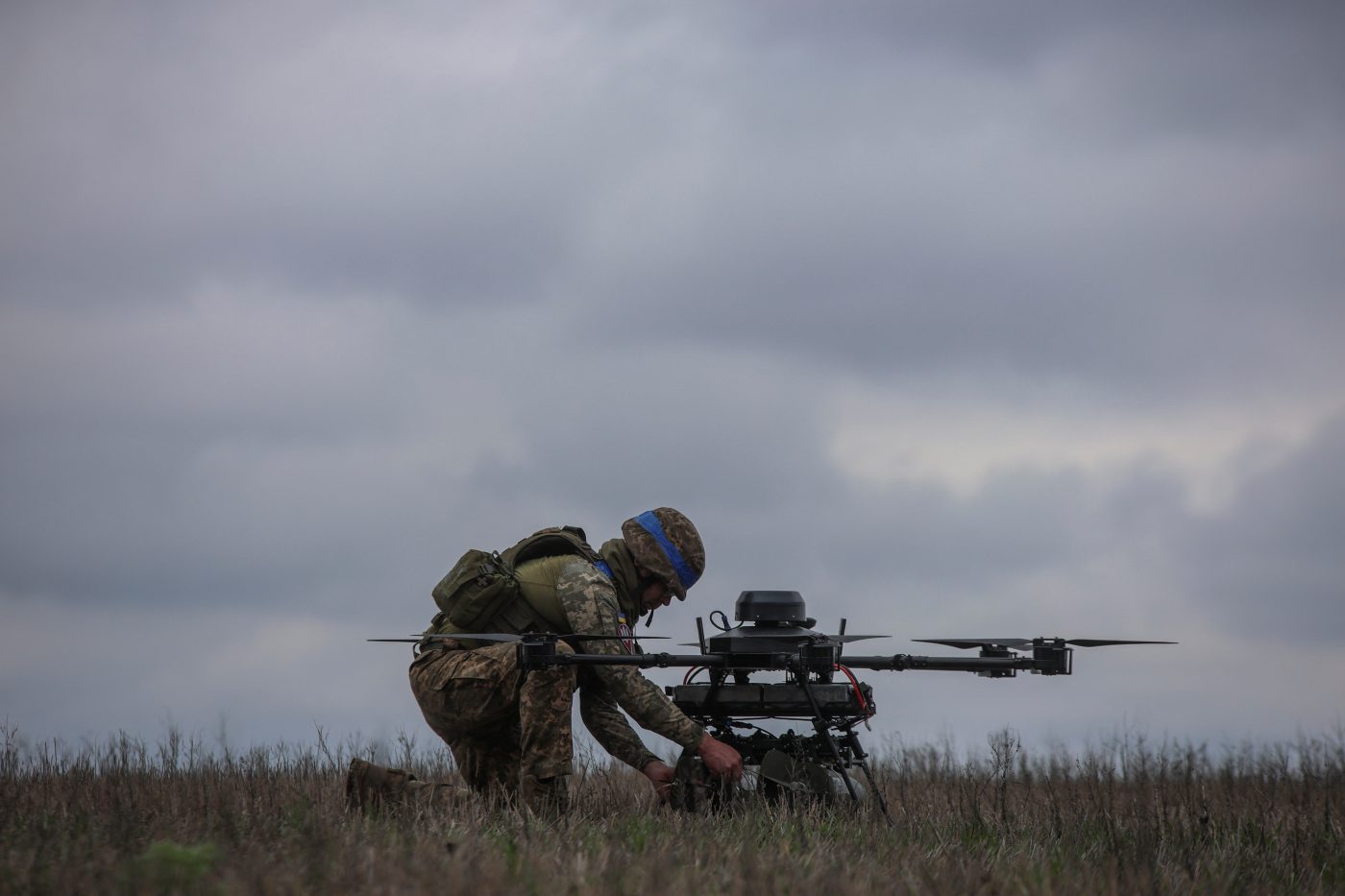
“The rise in UMPK glide bomb production from 40,000 units in 2024 to 70,000 units anticipated in 2025, has significantly increased the number of Ukrainian troops killed during defensive operations,” said RUSI. “This has had numerous knock-on effects for the different arms and services, as they have been pushed to completely avoid observation of their positions, to disperse or seek concealment underground, and to rely on uncrewed or autonomous systems to keep and kill the enemy at arm’s length.”
And yet, happily, and despite Putin’s faith in wonder weapons, the glide bombs will probably be defanged. Already, Ukraine claims to have had success in jamming them, leading to a sharp decrease in accuracy. “The golden era of the ‘divine’ UMPK turned out to be short-lived,” lamented a Russian pilot on social media. Perhaps not coincidentally, the Russian advance has slowed in recent months.
As with much else in the Ukraine war, the question is whether the lessons are universal. If ground troops, supported by artillery/drone/glide bomb attacks, can hammer Ukrainian positions in Donetsk, why not NATO positions in the Suwałki Gap?
The best answer is that Russia’s offensive triangle only works under the specific conditions in Ukraine. Russian bombers enjoy sanctuary behind the front lines because Ukraine lacks long-range air-to-air missiles to pick them off. Russian artillery can fire First World War-style barrages because the front lines are static, which is ideal for a rigid command and control system. Russian ground forces can operate without fear of manned aircraft hitting troops and supply lines.
Mass drone attacks would be a problem for NATO and other nations that lack air defense and electronic warfare capabilities. But Russia relies on a synergy between drones and other weapons. That triangle would be disrupted by NATO airpower that could target key links in the triangle, especially Russian strike aircraft as well as artillery.
This shouldn’t make NATO complacent. Given sufficient munitions and an almost inhuman indifference to casualties, Russia’s triple threat could inflict serious damage on Western forces. But it is a triangle that can be broken.
Michael Peck is a defense writer whose work has appeared in Business Insider, Forbes, Defense News, Foreign Policy magazine, and other publications. He holds an MA in political science from Rutgers Univ. Follow him on Twitter and LinkedIn.
Europe’s Edge is CEPA’s online journal covering critical topics on the foreign policy docket across Europe and North America. All opinions expressed on Europe’s Edge are those of the author alone and may not represent those of the institutions they represent or the Center for European Policy Analysis. CEPA maintains a strict intellectual independence policy across all its projects and publications.

War Without End
Russia’s Shadow Warfare

CEPA Forum 2025
Explore CEPA’s flagship event.