If the liberal world order forged by the United States and several key partners since 1945 collapses, could a different system take its place? If so, would it support an attractive version of global civilization? Professor Amitav Acharya at American University gives a guarded yes to both questions in a new book.
He rebuts those who announce an end to world order, or the onslaught of a new world disorder, or the absence of all order. Acharya presents a positive picture of Persian, Indian, and Chinese imperial civilizations BCE. Each produced some principles similar to those now enshrined in the Geneva Conventions and human rights law.
But do these distant models provide any hope for global civilization in the 21st century? Here are several reasons to reply, No.
India’s soft power shaped life and culture across Asia from about 250 BCE to 1200 CE. Indeed, there was an “Indosphere” in which much of Asia welcomed Indian culture and science. Sanskrit became the common literary language from Afghanistan to Java. Persia and China were also influential.
But none of the ancient empires showed a strong capacity to cope with challenges from within or without. Persia fell to Greece and then, much later, to zealous jihadists. Hindu-Buddhist India fell to Muslim invaders and then to British imperialists; China fell to rival kings and alien invaders, including the Japanese, against whom the KMT Nationalists and Maoists did not unite.
None of the ancient models works very well today. Despite occasional preaching of nonviolence, India shows no gift for conflict resolution within its borders or with Pakistan. (With China, however, ties may be improving.) More than 100 political leaders in India have been assassinated since 1948. India’s current prime minister was banned from the United States in 2005 because of his role in the mass murder of Muslims in Gujarat in 2002.
As the Indian National Human Rights Commission reported, there was “a comprehensive failure on the part of the state government [under Modi] to control the persistent violation of rights of life, liberty, equality, and dignity of the people of the state.” Modi has tightened many laws punishing Muslims for their faith. Suttee, the burning of widows, which the British mostly succeeded in bannin,g is now rare, but bride burning over dowry issues continues.
None of the ancient empires surveyed by Acharya came close to meeting the standards now set out in the UN Universal Declaration of Human Rights. Most employed slaves and maintained a caste system.
No descendant of those civilizations does very well on the UN Human Development Index or other measures of well-being. China ranks 75th on the HDI; Iran, 78th; India, 134th. China ranks fairly well on the Gender Development Index, measuring the treatment of women, but Iran and India rank among the worst. On the World Press Freedom Index, the so-called world’s largest democracy, India, ranks 151st, although this is still much better than the atrocious results of Iran, at 176th, or China at 178th.
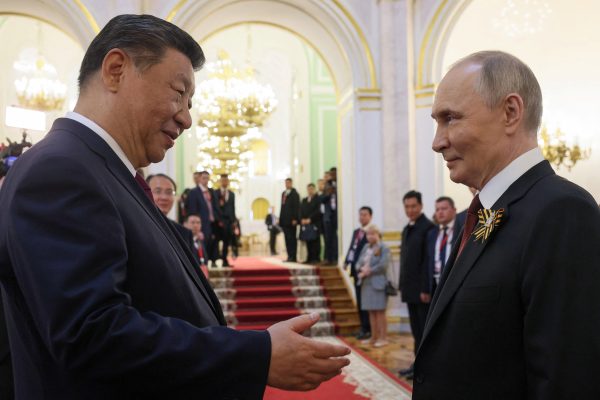
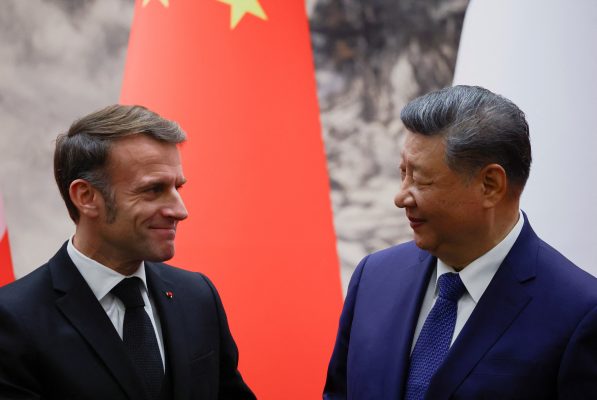
Beijing employs state power to repress national strivings in Tibet, Inner Mongolia, and Central Asia. Every language and dialect in China is being smothered by Mandarin. Chinese forces illegally occupy much of the South China Sea and menace Taiwan constantly. Chinese agents “cheat and steal on a massive scale” to take valuable technologies abroad, and practice transnational repression of Chinese in foreign countries. EU Commission President Ursula von der Leyen warned Xi Jinping in July that China’s ties with Russia were now the “determining factor” in China’s relations with the EU.
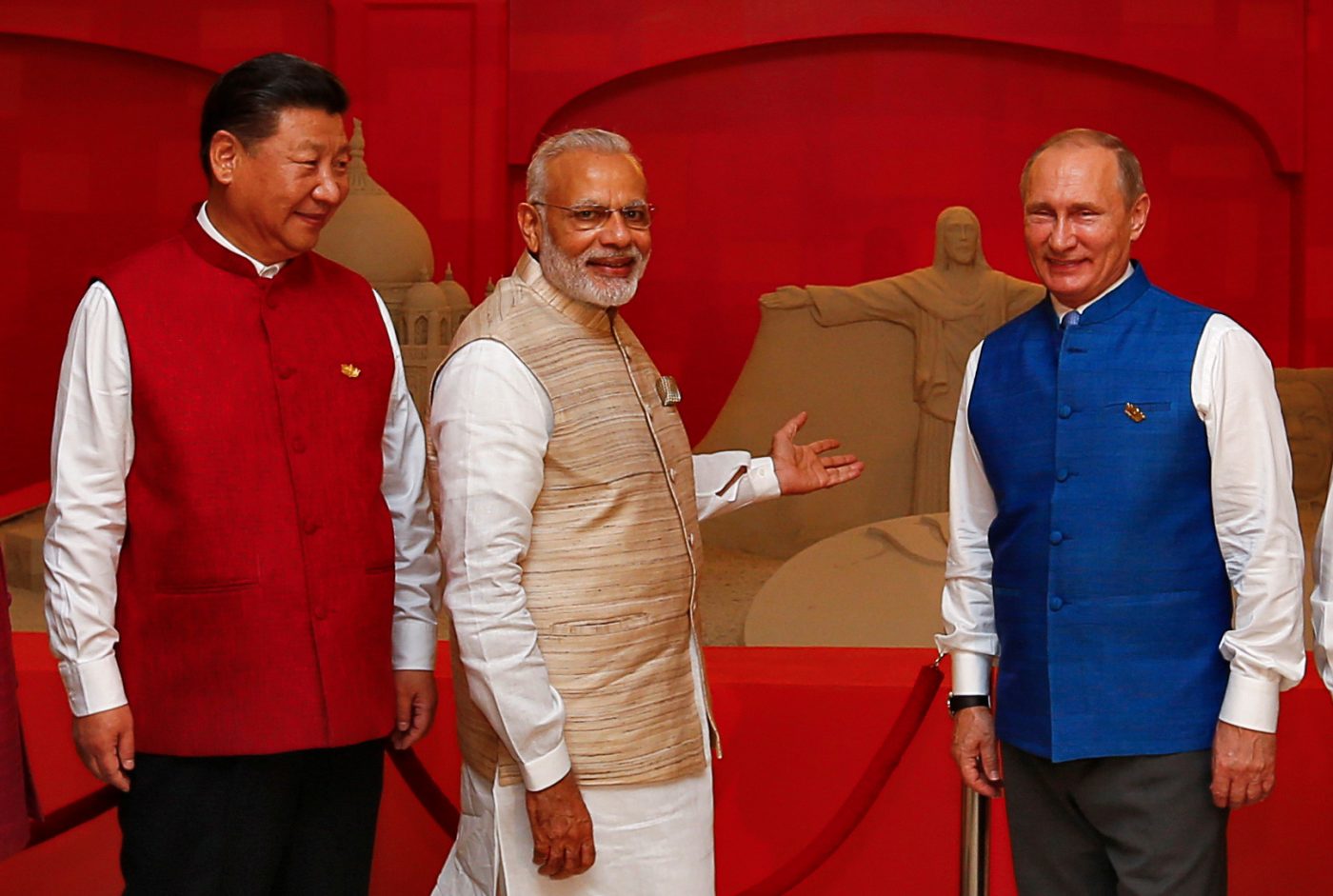
Could the BRICS alignment offer a meaningful alternative to Western dominance? BRICS falls from its pedestal by condemning Ukraine’s strikes on Russian infrastructure, while staying silent on Moscow’s relentless attacks on Ukraine. A failure to acknowledge outright military aggression and the attempt to erase a country from the map suggest nothing more than a belief that might makes right.
Given the imperfections of most nations, would humanity be better off with no order created and sustained by the so-called great powers? History says no. Without some ordering principle, a war of all against all may begin. It’s true there have been many wars since 1945, but it is also true that human casualties have been much less than in previous epochs. Economic and human development have surged, not just in the West, but in China and India, and other parts of the Global South.
Will global civilization survive the decline of the West? If Washington ever regains the spirit that inspired the Marshall Plan and NATO, the West may come together again and resume its quest for a peaceful and plentiful world order. Of course, the future depends also on the evolution/devolution of China, India, and others in the BRICS coalition. For now, hardliners in Moscow and Beijing have the approval of the world’s many lemmings
Walter Clemens is Associate, Davis Center for Russian and Eurasian Studies, Harvard University, and Professor Emeritus, Department of Political Science, Boston University. He wrote Blood Debts: What Putin and Xi Owe Their Victims.
Europe’s Edge is CEPA’s online journal covering critical topics on the foreign policy docket across Europe and North America. All opinions expressed on Europe’s Edge are those of the author alone and may not represent those of the institutions they represent or the Center for European Policy Analysis. CEPA maintains a strict intellectual independence policy across all its projects and publications.

War Without End
Russia’s Shadow Warfare

CEPA Forum 2025
Explore CEPA’s flagship event.