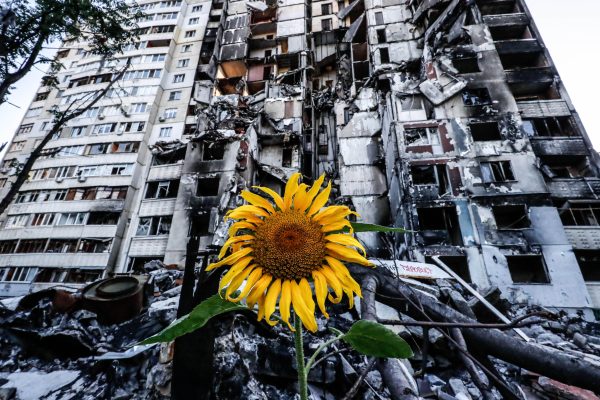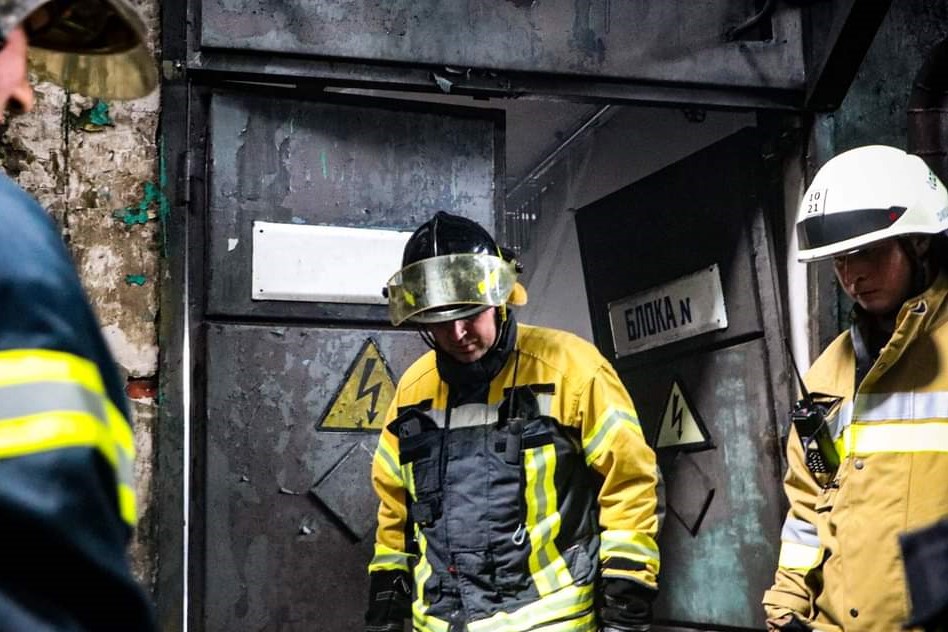
After its failure to take Kyiv, and Ukraine’s successful counteroffensive in Kharkiv and Kherson, Russia began a meticulous campaign to smash the country’s power system. These attacks have continued for more than two years, as on August 26 and 27, when nearly 300 missiles and drones pummeled Ukrainian energy infrastructure.
The strikes are designed to drive new waves of refugees into the rest of Europe, break the resolve of the Ukrainian people, cripple the country’s economy and fighting ability, instill war fatigue in allied capitals, and ultimately force Kyiv to sue for peace.
Between 2022 and early 2024, Russia focused its attacks on the power grid, specifically autotransformers. The centralization of the Ukrainian grid had made it reliant on these pieces of equipment, which convert and transmit power from generating plants to consumption points.
Russia calculated the units’ destruction would lead to the collapse of the system, as Ukraine’s infrastructure was designed and built during the Soviet era and could not be easily repaired with Western parts. The production of autotransformers is also highly concentrated and delivery times are long, so Ukraine would struggle to replace damaged equipment.
Ukraine’s electricity production is highly reliant on nuclear power plants. Of 18-20 GW of power available in early 2024, nuclear facilities accounted for 7.8 GW (around 40%.) In a power system with a high penetration of nuclear energy, conventional power plants, such as coal-fired units, play a crucial role in balancing the system as they can be ramped up and down rapidly to meet demand.
While Russia has not attacked nuclear plants directly, recent strikes on transmission and distribution systems near reactors have forced Ukraine to reduce nuclear generation or rapidly shut plants down — something they are not designed to do.
Such actions are not only escalatory due to the risk of nuclear disaster but also disrupt the flow of one of the last remaining power sources in Ukraine.
Against all odds, Kyiv demonstrated incredible resilience against these attacks, thanks to a number of factors that enabled the continuation of energy production and distribution.
First, when the full-scale invasion began, Ukraine’s air defenses performed much better than anticipated. This helped shield its infrastructure.
Second, Ukraine was one of the most heavily industrialized regions in the USSR. To ensure the resilience of production, the Soviets prioritized spare capacity when designing the grid.
Third, following the dissolution of the USSR, Ukraine’s economy and demography declined, resulting in lower demand for electricity, which provided the grid with spare capacity.
Finally, at the time of the full-scale invasion, Ukraine had large stockpiles of electrical equipment, allowing it to deploy rapid repair teams to restore the grid.
Disgruntled with its lack of success and the pace of Ukrainian adaptation, Moscow changed its tactics in March 2024. Russian strikes shifted from attacking the grid to assaults on conventional power plants.
By striking conventional generation, the Kremlin sought not only to curb power supplies but also to undermine the integrity of the entire system by making it more dependent on inflexible nuclear power. At the same time, Russia has begun targeting substations near nuclear power plants to disrupt this vital supply and push Ukraine into the dark.
Russia has focused its attacks on hydroelectric plants, thermal power plants, and combined heat power plants (CHPs.) As a result, Ukraine lost roughly half its power generation output, forcing energy companies to try to limit power consumption through scheduled regional blackouts this summer.
Kyiv is adopting contingency measures by increasing imports of electricity from neighboring EU countries, repairing damaged power plants, and deploying distributed generation technologies. Even so, power plants might only be able to supply two to four hours of electricity per day by January — the peak of the winter heating season.
The impact of the strikes goes deep, as electricity is key to enabling the supply of other vital utilities, such as water and heat.
CHPs are vital for warming people’s homes and are the main source of heating in Ukrainian cities. They produce electricity by burning fuel and the excess heat generated is distributed to consumers through a centralized network of hot water pipes.
Roughly half of Ukrainian households rely on centralized heating, particularly in urban areas. To function, centralized heating requires supplies of power, water, and heat. Russia’s strikes on low-pressure pipelines that transport gas to the suburbs are adding to concerns.
As winter sets in, the lack of heat in cities might trigger further refugee flows in what could be a cold and long few months.
NATO is following Russia’s bombardment of critical energy infrastructure in Ukraine with a close eye and providing a platform to mobilize allied support. Allies have already made unprecedented contributions to Ukraine’s defenses, and as part of this, have steadily sent some of their best air defense systems to help protect Ukraine’s cities from attacks.
Ukraine seeks a further seven Patriot systems in the coming months and these are starting to be delivered. NATO and partners should continue donating critical air defense assets to aid the defense of power plants.
By acting proactively with NATO support, Ukraine can prevent civilian suffering, provide a lifeline to its economy, and sustain its war production, all of which are critical for its defense against Russia’s unprovoked aggression.
Julian Wieczorkiewicz is an energy security analyst, and think tanker. Julian works on energy security at NATO’s Innovation, Hybrid and Cyber Division. Between 2019 and 2023, Julian worked as a desk officer for Russia at NATO’s Political Affairs and Security Policy Division. Prior to that, Julian served as a diplomat at the Polish Ministry of Foreign Affairs. During that time (2014-2019), he worked at the Polish Delegation to NATO. He also served as a desk officer for the U.S. while working at the MFA’s HQ in Warsaw. Between 2013 and 2014, Julian worked as a Researcher at the Centre for European Policy Studies (CEPS), a leading Brussels-based think tank. Julian also covered energy-related developments while working for the European Commission in Brussels and in Algeria. Julian is a James Denton Fellow.
Joel Ramlill joined the Energy Security Team within the Innovation, Hybrid and Cyber Division at NATO in October 2023. He has worked in both the private and public sector throughout his career. He holds a Bachelor’s degree in Economics, Politics and International Studies from the University of Warwick (UK) and a Master’s degree in Economics from KU Leuven (Belgium.) His current work for NATO focuses on energy economics, supply chains and geopolitics.
The views expressed in this article are solely those of the authors and may not represent the views of NATO.
Europe’s Edge is CEPA’s online journal covering critical topics on the foreign policy docket across Europe and North America. All opinions expressed on Europe’s Edge are those of the author alone and may not represent those of the institutions they represent or the Center for European Policy Analysis. CEPA maintains a strict intellectual independence policy across all its projects and publications.

War Without End
Russia’s Shadow Warfare

CEPA Forum 2025
Explore CEPA’s flagship event.