Krista Viksnins
Good morning everyone. Welcome to this press call here, morning the US folks, good afternoon to all of our European friends joining online. My name is Krista Viksnins. I’m a Senior Program Officer here at the Transatlantic Defense and Security team at the Center for European policy Analysis. I would like to flag that this conversation is on the record. So thank you all for joining us this morning for this press call. We’re here to discuss CEPAs most recently published Arctic report entitled Up North: Confronting Arctic Insecurity Implications for the United States and NATO by a great slew of folks. Some of us are on the line today, including Mathieu Boulègue, Minna Ålander, Charlotta Collén, Edward Lucas, Catherine Sendak and myself, Krista Viksnins. Today, I’m joined by two of the report’s authors, CEPA Senior Fellow Mathieu and CEPA SeniorFellow Minna, along with our wonderful Senior Fellow Lance Landrum, who joined us on our delegation trip to the Arctic earlier this year. This report is part of a year long study that CEPA conducted on the Arctic and high north that was published just last week on December five. You can access the full report on CEPAs website cepa.org. If you’d like to ask any questions throughout this conversation, please use the raise your hand function in zoom or post a question to the chat. Happy to answer from from either place, I am now going to turn it over to our lead author, Mathieu to give us a short overview of the report before we dive into all your great questions. Thank you.
Mathieu Boulègue
Thanks. Hello Krista, and it’s great to see so many, so many people tuning in for this. This, this very important report, because it really does come at a critical juncture for Arctic security. And the way we approached it was really to take a look at what’s been happening in the context of a changing geopolitical environment, and what is the way forward? What is the path forward in terms of US policy and NATO policy in this region? Why critical juncture in the first hand? Because it is really the end of illusions when it comes to Arctic governance and Arctic security. We are, and we may have reached a moment where this sort of area of low tension, Arctic exceptionalism, may have passed, even though the area in general, the whole of the Arctic, remains relatively stable as of today, it’s really no longer working in a geopolitical vacuum. Andwhat we thought was an exceptional region was actually just an exceptional moment of stability, of predictability, of transparency and of low tension. This moment may have passed, and it might have passed because of several impacts that we really touch upon in this paper. First, climate change, of course, the impact of climate change on the whole of the Arctic meansthat the Arctic will be more accessible and with increased human presence, and increased human presence will bring about more tension, more accidents, and therefore more miscalculation that could turn into forms of escalation, also increased insecurity provoked by geopolitical competitors, mostly Russia, through its aggressive behavior in the region, but also China, in terms of in-roads when it comes to presence, future presence, specifically, and governance. Governance being the sort of third impact in terms of the way forward. There is absolutely no clarity today as to what the next steps are in terms of circumpolar governance. And finally, we must deal with on both sides of the of the divide, from the Russian side and the NATO side. We have to deal with the fact that the non Russian Arctic is now NATO territory, with Finland and Sweden accessing the Alliance. So this has a lot of geopolitical consequences that we have to factor in for future policy. And the second part of this, this juncture, is really, really the reawakening of US policy to Arctic security affairs. I’ll let Lance discuss more specifically the NATO part. But for the, for the US parts, in particular, there is now genuine interest in the United States with regards to Arctic security affairs with a flurry of strategic documents since 2022 the national security, the national strategy for the Arctic region, sorry, and its implementation plan, the DoD strategy of 2024 and the willingness to have a whole of government approach, which also has turned into not just words but action, such as the creation of a specific office for the Arctic and resilience at DoD level, the creation of the Ted Stevens Center as a regional center on Arctic security a few years ago, but also the confirmation of an ambassador at large, with Mike Sfraga being confirmed as Ambassador for the Arctic. So words, but also action, and this will shape the future of US and NATO presence in the region, such as the what is the the actual role in place of the United States in a changing Arctic, but not just in terms of visibility, but also in terms of capabilities of and procurements, but also presence as part of the US strategy, to enhance visibility in the region, to exercise in terms of presence and deterrence, and also to engage in terms of cooperation with allies and cooperation inside the US body politic and agencies. So this is what we were hoping to achieve with this paper, to really bring some clarity on this whole equation, this sort of whole critical juncture, and specifically address little research questions and things that we don’t really see anywhere else in literature, the academic discussions or in the in the debates. Which is the role in place of NATO in this whole architecture, the role in place of Arctic specific deterrence, if we are to really deter aggressive and nefarious behavior in the region, we need to think Arctic first, and deterrence in an Arctic context, but also the role in place of technology, and what modern technology, specifically autonomous systems, for instance, do bring about in this changing environment, and how to foster greater collaboration between allies in that in that regard. So I’ll stop there, and we, I think we all look forward to your questions. Thank you very much.
Krista Viksnins
Thank you, Mathieu. Super helpful overview. I think I’m actually going to turn to you first, just as after that helpful overview, and then we’ll get some questions to other speakers. And then reminder folks, you know, if you have questions, please feel free to put them in the chat or raise your hand. So you know we are here based on in Washington, DC, I have to ask you know aquestion about, you know, future administration. And you know, Mathieu, your thoughts on, you know, in this context of this new US administration, the Trump administration coming in in January, you know, what are your thoughts on the main threats and challenges when it comes to Arctic security? And what should US policy makers be considering?
Mathieu Boulègue
So I’m speaking on the record, so I’ll be I’ll be careful about the new US administration. But so there are several and many unknowns concerning the future approach of the Trump administration with regards to Arctic policy. There is what we know of the Trump one administration, which was mainly capabilities based. There was a strong willingness to engage in the Arctic through ice breakers and to fill what is perceived or understood as the ice breaker gap, basically the very simple math that Russia and China now have more ice breakers in the Arctic than the US, of course, but also the rest of the whole of the Arctic seven, or the NATO seven countries altogether. So there was a willingness to be more present through ice breakers, which is a capability based approach. What we have seen since 2022 and even since 2019 actually, with the first strategies that came together from each of the Army Corps, the ground forces, the Air Force, the Navy, the Coast Guard as well, and Homeland Security all rolled up their new sort of policy since 2019 that was all integrated in 2022 inside the [unintelligible] national strategy for the Arctic region and further applied to the implementation plan in 2023. So all of this will not be removed completely, right, even if there is a new shift towards a capabilities-based Arctic policy for the US in 2025 moving forward, that whole of government, whole of NATO, approach to Arctic security, will not be completely removed, and will still, will still linger and continue. So what we may have depending on US priorities is a slowdown of that whole of government approach, but not a complete removal of it, right? I don’t think that the US will will completely [unintelligible] US foreign policy and internal politics will completely disregard what’s been built upon for the past four years now, five years, and completely disregard it. So we’ll see. With regard the threats, and very quickly, I think there is, there will be a continuous threat assessment that Russia is, of course, up to no good in the region, that Russia is indeed one of the harbinger of insecurity in the region, and that China must be kept in checked, in check, sorry, with regards to its in-roads, whether it is actual physical presence, remote presence through proxy access or technology, and of course, governance and the future of Arctic governance and the Arctic Council.
Krista Viksnins
Thank you. Thank you, Mathieu. You know, I want to turn to our Senior fellow, Lance Landrum, who’s on the line to give us, perhaps you know your thoughts on what role NATO should be playing in the Arctic, you know, based on conversations you’ve had and thoughts you know. You know there’s debates upon around town about command structure, and if you have any thoughts on that and the challenges there, but we’d love to hear your thoughts more generally, Lance thanks.
Lance Landrum
Krista, thank you very much for this opportunity, and thanks for everyone who’s joining here. I think you know, with regard to NATO, you know, and part of my comments as I open up, I’ll address some of the planning efforts regarding NATO. But I think NATO as an organization certainly is very keen on the Arctic. They understand their strategic importance of the Arctic, both in an economic sense, in a military sense, in a threat sense, and a security sense. And so I think NATO as an organization will continue to engage in multilateral institutions, whether it be engagement through the European Union or engagement through the Arctic Council, in a way that NATO normally does right, which is relatively soft approach because of the defensive nature of the Alliance. On the region. I think what I would emphasize is that when we visited in late August, we clearly learned that the political support, both from the political bodies in the two nations, Sweden and Finland, and the population at large remains very strongly in support of the NATO alliance accession that both nations have made. This includes in Sweden, where they had some trouble getting on board the Alliance, and we won’t go into that here, but the population and polls remain very, very strongly in favor of their accession to NATO. Regarding both Finland and Sweden, I think it’s important to understand that both of their cultures really are a very humble culture. They’re reserved in a way that is not very boisterous, right? They are not ego centric, and what they really admire is a less talking and a lot more practical action, and focus on both their political will, their political engagement, and their military capabilities in the region, combined with their long standing knowledge of the Russian threat from their East. And so as they were partners with NATO and then later an invitee status on the way to becoming full members in the Alliance, you would see that they would listen a lot more than they would talk, which would be appropriate for the invitee status. And I would ask everyone to just double check they’re muted on their systems as we go forward. They have a relatively small standing military force, this includes Norway now, right? They have a relatively small standing military force, but can bolster quite a large reserve force, since they, for many years had a series of conscription and national service from their members. Now Sweden divested of that in the end of the Cold War era. But then came back to things like conscription and Civil Defense around the 2017, 2015, time frame, and are now reinvesting very much in civil defense. Finland never divested of civil defense. They’re very much focused on a whole of society, awareness of the threat a whole of society, participation in civil defense, whether it be first responders, military reserve call ups and other duties and roles that could be very applicable in times of crisis or conflict. And so I think both the NATO alliance has a lot to learn from both Sweden and Finland, particularly in society, resilience and society civil defense. Sweden has formed a National Security Council. This is relatively new, just a few years old, and they have recently published a new national security strategy that was translated into English back in September of this year, and that is very much focused on the pillars associated with their civil defense, their resilience and understanding the threat and how they deal with it across their entire focus of government, their entire institutions of power in their government to include partnering and allies with other regions, and other nations in the region. As far as NATO planning goes, NATO planning took into account the accession of Sweden and Finland, the NATO, as many know, came out recently with their approved new family of plans. It’s a whole new set of coherent operational plans that span peace time, crisis, and conflict in a regional sense and a domain sense across the entire Euro-Atlantic area. And those plans were developed in very unique and unprecedented coordination with all of the NATO allies. And as they were taking shape, particularly the final phase the regional plans, I know, Supreme Headquarters Allied Powers Europe, General Cavoli, and his staff made an incredible outreach to all the nations. Now, during those times, Finland was an invitee and then a new member, Sweden was an invitee status. So it may not have been perfectly aligned with all the authorities associated with coordination, but I can tell you there was very detailed discussions among those two allies, our two newest allies, along with all the others, in order to integrate home nation defense plans into the NATO operational plans in a way that helps make them coherent and integrated and interoperable with the nation’s forces. And I think that that is a very tangible way that the NATO military authorities, with the political backing and political direction, of course, from the North Atlantic Council, had put pen to paper and put actions into into reality. And of course, what those plans now do is they form the foundation for requirements. So for the first time in over 40 years, the NATO alliance has a coherent set of integrated plans that help define the operations, the activities and the missions of the Alliance. And importantly, they fought, they formed the foundation of the requirements that the military authorities have defined in the NATO defense planning process, the five step process, over five years that they’re now in step three. They’ve defined political guidance, the minimum capability requirements, and this year, they have levied the capability targets onto the nations. They will move on to capability road maps, and then finally, an assessment of the NATO defense planning process. And I’ll conclude with the nations to include our new allies, and the Nordics in particular, need to deliver on those capabilities for the Alliance in order to have the military backing that the political leaders need in their engagement across all of their instruments of power. Let me conclude there, Krista, and I look forward to the discussion.
Krista Viksnins
Thank you, Lance. Really appreciate that, that NATO perspective, I’m going to turn it over to Minna to answer a question, and then again, thank you. I’m happy to see some some questions flowing in the chat. But again, feel free to raise your hand as well if you’d like to ask the question in person. So finally, our fellow Minna Ålander, who’s joining us from the Arctic region today, [unintelligible] on video off, I would love to ask your thoughts. You know, in regards to Russia’s full scale invasion in Ukraine, how you see that this has kind of changed, you know, the percept, your perception of the risks and challenges in the Arctic region. Obviously, Russia has been active in the region, and you have been keen to highlight that in your research in the past few years. But would love to hear your thoughts Minna on these issues. Thanks.
Minna Ålander
Hi everyone, and first of all, apologies for not being able to turn on my video like as Krista mentioned, my excuse is that I’m just on my way back from from the from the Finnish Arctic. So I hope that this connection is good enough, so that you can at least understand me well enough. So from a Finnish perspective, the NATO accession has been quite significant in the sense that in Finland, we didn’t use to really think about the Arctic security as something separate from the overall national security, and it was more just like one part of the whole national defense effort. And now, as a NATO member, Finnish defense planners and policy makers have realized that we need to to communicate better to NATO allies why, why the Arctic matters, why at least a certain amount of allies should have Arctic capabilities, because this is obviously not so so self evident to to everyone, and not everyone has even the cap, like operational capability to work here. Apologies for the noise in the background, but I’ll leave it here for now, and I’ll be happy to answer any more questions.
Krista Viksnins
Thank you so much. Minna, great, great to have you on the line. So I want to start with the first question that we received in the chat. Again, feel free to raise your hand if you want to ask on the call live. This was from Ciaran McGrath from Reach PLC. And she asks, I appreciate it isn’t in the Arctic Circle, but the recent incident involving cables and the Baltic Sea being damaged appears to highlight the vulnerability, vulnerable nature of Western infrastructure. Is this something Russia could potentially target in the high north? Mathieu, I know you responded with a link in the chat. Would you like to take this one first?
Mathieu Boulègue
Sure, absolutely. It’s a great question, Ciaran, so yes, well, I wrote a report on it, 30 page report on exactly this. So feel free to feel free to look at it. So yes, absolutely. So not just the high north, understood as the European part of the Arctic, but also on in the Pacific side of the Arctic, which has a lot more to do with US Homeland Security and Defense in Alaska, for instance. We know that Russia has both the capabilities and the military structures in place to disrupt critical underwater infrastructure and, more specifically, data cables, which are critical to the fact that we’re speaking on Zoom as we as we are now. The Arctic is specifically vulnerable because of the lack of redundancy in terms of the number of cables available. If we look at past incidents around Svalbard, for instance, if we look at past incidents in the Baltic Sea, which, yes, is not Arctic per se, but still in a sort of Nordic Baltic environment, so less resilience, less capabilities to repair, because of geography, because of distance, because of climate, and because of less available assets for Arctic specific operations, it is harder to repair damaged cables or damage critical infrastructure in this region, and also because of the lack of spatial diversity in the cables at the bottom of the ocean. So they are generally closer to each other because of structural reasons on the seabed. So the Arctic is definitely a choke point. And there are several choke points that are identified in this paper to show that the Arctic is definitely a place where, if I were a strategic competitors to NATO, the US, and global West in general, I would insist on developing some nefarious activities there. So absolutely.
Krista Viksnins
Thank you, Mathieu. I’m going to turn to the next question in the chat. But again, folks, if you have any questions you’d like to ask live, live, please just flag for our team. So George Allison from the UK Defense Journal asks, with the UK retiring two of its assault ships, does this diminish the UK’s role in the Arctic? More generally, what role do you believe the UK is best suited to play now in the future, in the shadow of its ongoing defense review? Any, any thoughts? Lance would you like to start? Obviously, you can wipe away if you don’t want to answer any of these.
Lance Landrum
Well, I think, you know, I think that I would answer that in a general sense, in that, you know, some some changes in some specific capabilities, in the sense of onesies and twosies. You know, I think that is less important than the political will and the in the political willingness to engage and to be strong in the region. And of course, you know, there’s across all the institutions of power, right the political engagement, the diplomatic engagement, through the information space, economic space, through there, and the military space all combined. And of course, in a capacity role, the the military would, of course, like resources and capacity to be able to fulfill all the political requirements in order to engage in the reason region and can be helpful in that. But I think what capacity exists, both on a Russian side or whether it be a Chinese side or other nations, really need to have the political backing in order to be able to be strong willed, ready to engage across multiple fora in the multilateral environment across the world, whether wherever it is related to the Arctic, that I think is really almost or probably more more, frankly, more important than specific military capability, than one or two or three pieces. Now, I think Mathieu mentioned many political areas in the United States, all the different centers and the strategies, Ted Stevens Center, etc. That’s really, really great, because it starts to form a an epicenter of political will and political engagement. And now, will the resources follow? Will the focus remain, and will the prioritization remain in order to resource capabilities to put action into that engagement. So I think, yeah, Russia’s changes in force posture are notable, but I also think the political part is really important.
Krista Viksnins
Thank you. Thank you Lance. Um, thank you guys. I see great questions coming in the chat. So please keep them coming. Next, we have a question from Natalie Pressman of CBC, who asks Canada announced last week a new Arctic foreign policy. What does this say about this critical juncture, and how valuable are the steps Canada says it will take through the new policy? So giving some examples of open consulates in Alaska, Greenland, [untintelligible] new Arctic ambassador, etc. Mathieu or Minna, would one of you like to take this question?
Mathieu Boulègue
I’m happy to start off. And Minna, I don’t know if you if your network is still still great, but I’m happy to start off. So yes, Canada, I think that there’s a lot of questions on that. So the new foreign policy is really a continuity of the present foreign policy, which places Canada’s and, more generally, North America’s Arctic into a global perspective. There is an understanding I think in Ottawa that this is very much global in the context of climate change, but it’s also excessively local because of the nature of Canada’s Arctic and the presence of indigenous and local communities. This is very much a question of the daily livelihood of these populations. So it’s from global to local, and from local to global. Several priorities that continue NORAD modernization and the continuity of the North Warning System, specifically the Over-the-Horizon radars, for instance, and continued investment in better tracking, better remote sensing and so on to achieve that sort of seabed to space domain awareness that is very relevant to Canadian ,North American, and NATO operations. Continuity when it comes to diplomacy, because there is a very clear understanding in Ottawa that there is no stability in the Arctic without clear diplomacy. So it’s exactly what the engaged part of the US [unintelligible] in the National Strategy for the Arctic Region, in terms of cooperation with allies, better standing with the US, better standing with the with the crown of Denmark and Greenland better standing with allies in general, plugging Canada into that whole ecosystem in terms of comparative advantages, what can Canada offer to NATO and to allies that they don’t really do, or that they don’t do enough of, and specifically when it comes to diplomacy, speeding up the process of having a stable Arctic within ourselves, within that club of NATO seven, or Arctic seven, and that the boundary negotiations over both or specifically linked to anything related to the UN Continental Shelf Commission is really, is really about that. It’s having a stable Arctic within ourselves, so that we are crystal clear on who does what. We don’t leave any any pieces or shadows. We don’t leave any gray zone or gray areas, even from a legal perspective, with the with the [unintelligible] nation and so on. So it really is about streamlining better cooperation. And then finally, in that, in that foreign policy, something that has always been there in Canadian foreign policy and internal politics for that matter, actually is the link with indigenous and local communities, the fact that they are the first impacted by climate change in terms of their livelihoods and their survival, but they are also the most critical and single most important part when it comes to domain awareness in the region. This is something that I think Lance will agree, that when we talk about Arctic we always say we need more domain awareness. And this is sort of the running gag of, you know, the sort of buzzword of the moment when it comes to Arctic presence. But local communities are domain awareness by definition, because they are there, they’re present. They are the eyes and ears of Arctic stability and Arctic visibility. So I think there is also this understanding in the Canadian foreign policy and internal politics at large that engagement with these communities, continued protection and economic development of these communities, is the best weapon we have in a way, or the best tool we have to ensure that domain awareness and to ensure that that visibility in a changing Arctic. So definitely, definitely a welcome addition, definitely something that drives Arctic stability and something to to rejoice in terms of that increased interaction with allies and increased interaction with partners.
Krista Viksnins
Thank you, Mathieu, Minna, I just wanted to give you opportunity to weigh in on the last two two questions. I know we can’t see you, but if you, if you would like to say anything on these questions?
Minna Ålander
Yes, sure. Thanks, Krista. Actually on Canada, I think that from a European perspective, a European Arctic state perspective, it’s really positive that Canada has started like proactively reaching out and making sure that, like we we have only, not only domain awareness in the different parts of the Arctic, let’s say the North American Arctic and then the European Arctic separately, but that we understand each other, we know what’s going on in both parts, and that we are also aware of the different nature of challenges, to an extent in the different parts of the Arctic. So let’s say that in the North American Arctic, China is much more visible also in military terms, through the through the military drills with with Russia that have been increasing in numbers and frequency recently. And on the other hand, Russia is very close and very present in the European Arctic. So there’s a lot of valuable, sort of, like information exchange there. And Canada has clearly become more proactive in [unintelligible] to the European Arctic state. So this is, like, very positive from European perspective. And I think that that the cooperation has to be sort of enhanced and intensified.
Krista Viksnins
Thank you Minna. We have a slew of questions about Canada in the chat, so I want to make sure I keep keep moving all along to answer all of these. So next from Kira of NSL media asks, what are your thoughts on the announcement of a new Arctic ambassador in Canada and a specific Arctic defense policy last Friday? She also asks, makes this comment, many criticisms of Canada’s Arctic policy is that the infrastructure for defense should already be in place and we do not have the time to build the announced northern hubs. Is Canada particularly vulnerable in this sense? Lance? Maybe I’ll turn to you first, and then if Mathieu and Minna, would like to weigh in?
Lance Landrum
Yeah, sure. I think, you know, let me comment on, do we have time to build the hubs? Do we have time to build the infrastructure, etc? You know, I think my only response to that would be, if we don’t start now, then when will we start? You know, I think, I think what, what we need to think about is, what is our long term strategy and vision for deterrence and defense in that area of the globe, and how can we take tangible steps in order to bolster that deterrence into in defense of that area based on the nation’s contributions, and so no infrastructure can be built quickly, no ground infrastructure or military equipment usually can be produced very quickly. But I do think that it’s relevant to start somewhere and to make tangible progress in order to backstop the political maneuvering that takes place there.
Krista Viksnins
Thanks, Lance. Mathieu, is there anything you want to jump in on this?
Mathieu Boulègue
Yeah, just very quickly on infrastructure. So yes, but in the context of the impact of climate change, we need stronger assessment on the sustainability of these infrastructure there is, there is, there was an assessment very recently, for instance, in the US last year, actually on the impact of climate change on US military infrastructure. The same is done on civil infrastructure. in Alaska. Canada is doing also its homework on this. We are at that juncture as well that the future is remote. The future is by proxy access with technology, and that human presence will be an element of that proxy or remote access. So we need to think about, you know, the next 50, 100 years in the Arctic. So if the infrastructure has not been built fast enough, then maybe it’s a budget issue. Maybe it’s a NORAD modernization issue as well. When it comes to the radar sites, for instance, it’s all a very complicated balance that is even more impacted by climate change. So you know, not just because we don’t have infrastructure right now doesn’t mean that the system is not working or that Canada is vulnerable. If you look at the recent incidents, for instance, with the Chinese UFO spy balloons, for instance, we know that NORAD is working. We know that the North Warning System is definitely able to monitor, track and follow potential threats to Northern America. So it’s more a question of increasing capability, and not necessarily the infrastructure itself, because technology will bring solutions that we haven’t really thought about yet. And this is, this is what we are trying to explore in that report as well.
Krista Viksnins
Thank you. Mathieu. Minna, I want to give you opportunity to weigh in, if not happy, to move on.
Minna Ålander
Yeah. So I would say that in the Arctic context, and this is very true for countries like Finland, for example, but also for Canada. The issue with Arctic infrastructure is that it always, preferably, has to be dual use, in the sense that it has to serve both civilian and military purposes. This is the case, for example, in the whole sort of Cap of the North area encompassing Finland, Sweden, and Norway, and I think that this would be a smart way to go. Also, in Canada, there’s not much point in building purely military infrastructure if you want to be cost effective. And think about also the local communities. That’s that Mathieu mentioned earlier, that are the backbone of the Arctic. So that’s my two cents on that. Also there is, of course, the factor that, for example, the Canadian Arctic is so incredibly vast that the distances are such that an invading force, if it was human, mainly, would have a hard time reaching any population centers before they would die of natural causes. So there’s the basic survival element to this, and this applies particularly to the Canadian Arctic. So there is certainly like, not to be too complacent about it, but there is an element of sort of the Arctic defending itself to an extent.
Krista Viksnins
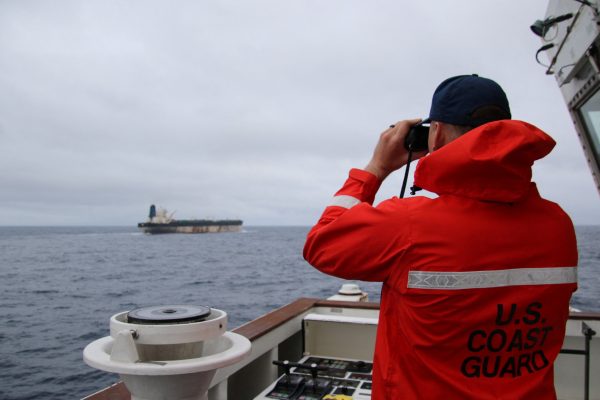
Thank you, Minna, thank you for that perspective. Next we turn back to the US. John Grady asks in the chat, what does US Coast Guard posture to eight ice breakers mean for security in the Arctic? Mathieu, do you want to start with that? And maybe Lance after?
Mathieu Boulègue
Yeah, sure, absolutely. So that’s part of the ice breaker gap and the plan for the US Coast Guard in terms of procurement and attribution of the two new class of ice breakers. So the polar security cutters, which are designated for the heavy ice breakers, designated for Arctic and an Arctic operations, the new class that’s supposed to be earmarked at least for four or five, depending on how you look at the budgets, but at least that’s what they’ve been calling for, and that will continue to be streamlined. Then with the medium security class, the Arctic security cutters, the ASCs, medium polar ice breakers. So the numbers vary. So if we’re stuck with eight or whatever number right now, we shouldn’t be stuck with these numbers in the future, not least because it’ll depend on the ability of the US to deliver it’ll depend on the ice pact as well that was recently signed with Finland and Canada, and it will also depend on the impact of climate change. And do we, you know, in this very question that I’m throwing to everyone here is, will we need ice breakers in 50 years in a changing Arctic? That’s also the question, and also to be reminded that the for the polar security cutters, they will be also earmarked for Antarctic operations, mostly for the resupply of US and international bases in the on the continent, on the Antarctic continent. So still, a lot to be to be discussed. The new, the new Coast Guard posture, is very clear. It’s, it’s, you know, it’s about access. It really is about enhancing domain awareness, enhancing presence, but also, very simply, enhancing Homeland Security. It is about the protection of US territorial and maritime borders. So it is needed, whether it is, you know, an ice breaker, an ice breaking ship, or a ship that is able to conduct the full range of missions, of Constabulary missions and Homeland Protection missions, if they are ice class and ice enabled, then that’s great, that’s even better, because they can respond to the full class of missions and the full range of missions. Now the question is money and budgets and speed of in a way of construction, and whether, by the time we sign on these on these cutters, in the time they’re delivered…yes, thank you for the interruption. But I think I am mostly done with that question.
Krista Viksnins
Thank you. Lance, before I turn to you, I see that John just said, added a quick follow up of if you want to answer this part part two that the US Coast Guard’s new posture, just want to hear your thoughts calling for eight instead of six ice breakers. And if this shows some kind of shift in in military security and your thoughts on that, thanks.
Mathieu Boulègue
Just about, yeah, it’s just about, if you, if you put more then you can settle for less instead of putting less and settling for even less. So it’s really, it’s really about the math, to be honest, it’s the spreadsheet logic.
Krista Viksnins
Thank you, Mathieu. Lance thoughts on?
Lance Landrum
I think, well, I mean, I simply, Matthew explained this really well. The only thing I’d add is, right this, there’s one, there’s a lot of political discussion. There are strategies that are written, right. There are security papers written, there are centers being formed. And I think that the tangible infrastructure of which the question is about…
Krista Viksnins
I think we lost you there.
Lance Landrum
Yep, so this the ice breakers are a way to put teeth into the strategies and into the political engagement. Otherwise, the strategies and the papers and the political engagement is really just paper tigers and hot air, right? And so it’s putting money where your mouth is. Ice breakers a very visible way to do that, and so in that sense, I think that it’s important.
Krista Viksnins
Thank you, Mathieu. I’m going to keep moving along just just for time’s sake, but please obviously flag my attention if any of you want to jump in here. We have a question from Kira, again, from NSL, asking, will foreign policy and relations with the new Trump administration hinder Canada’s plans. Mathieu, do you want to start and then Minna, if you want to weigh in?
Mathieu Boulègue
Yeah, absolutely. So well, once again, on the Trump plan and policy, I think we know, we still don’t know exactly what it will look like, but I don’t think there will be any hindrances in the sense that, well, then NORAD modernization. Fine, okay. Point taken. NORAD mod might be a point where there will be some very hefty discussions on budgets and on the specific amount and capabilities deployed for the new radar sites and the speed with which the new over the horizon radars will be delivered and installed and integrated within the North Warning System. That might be a point of discussion for but that’s that’s, in a way, a defense related and defense industrial question that might just remain at the level of defense industrial if it doesn’t get to sour with budget discussions. For the rest, no, because there is continuity, and there will be continuity once again, with the Trump administration, regardless of maybe a new focus on icebreakers and the icebreaker gap. And there is a continued and streamlined policy in Canada with regards discussions on continental shelf, discussions on more diplomacy, NATO cooperation. So I don’t see any hindrances, apart from maybe budget discussions that will maybe have to be to be postponed to a later administration in the US, which comes back to the previous question to infrastructure, and the fact that they may not be enough presence for Canada in the in the region. So everything is tied together, but I don’t see how a specific Trump administration would have a major impact on Canadian plans for the Arctic. To be honest, it’ll be, it’ll be, you know, more of the same, probably maybe with some caveats, but otherwise continuity.
Krista Viksnins
Thank you, Minna, any anything to add on here?
Minna Ålander
We can go on in the interest of time, I think there are quite a lot of questions.
Krista Viksnins
Yes, all right, well, so next we have a question from Liam from Bloomberg Opinion, who asks, given the inherent difficulty of conducting large scale, sustained military operations in the Arctic and High North, should we think of that region as a potential threat of conflict in its own right, or a place into which some future confrontation elsewhere extends. Relatedly, in my reporting, it was expressed to me that the likeliest area of the Arctic for potential warfare in the traditional sense, is Finland. Do you as authors, share this with you? Minna, thought I’d maybe turn to you first as our Finnish perspective. Thanks.
Minna Ålander
Yeah, thanks, Krista. So of course, as I said, this is very much a real possibility that is being prepared for in [unintelligible] in Finland. So what I said in the beginning about this Finnish sort of like view of the Arctic as not something separate, but just one part of the country, that applies here 100% so you could say that all of Finland, although not technically, in the Arctic parts also, let’s say southeastern Finland is climatically very similar to the Arctic, so cold winters, lots of snow and so on. So in terms of like, what is relevant for Arctic warfare and preparedness, all the same things apply. So yes, this real possibility that, like conventional war, could happen in the Arctic parts of Finland and also elsewhere in Finland. The same applies, of course, also for [unintelligible] and Norway. So especially the presence of Russia’s main second strike nuclear assets on the Kola Peninsula, only a few 100 miles away from from the Finnish border, is is a significant factor here. So it’s an area of or an important base for Russia’s global power projection, even so. So this, of course, heightens the risk of potential conflict in the region, because it is so important for Russia, and Russia is likely in the future to emphasize more than nuclear nuclear deterrence and nuclear assets. So this is one reason why it’s not an outlandish idea that work could happen in the Arctic and is being prepared for and it is also, by the way, planning and preparedness exercises happening among the three Nordic countries, Norway, Finland and Sweden. So, so those links are being reinforced and so on. And by the way, infrastructure is also an issue in the in the European Arctic. So lack of it is definitely, definitely an issue. And this is something that the three Nordic countries are, for example, trying to address together in the context.
Krista Viksnins
Thank you, Minna, Lance, do you have anything to add? Yeah, over to you.
Lance Landrum
I think the question about an area for major conflict or an area for expansion is very relevant, and that’s difficult to answer. There’s a certain preponderance of forces and infrastructure on both sides that would lend one to think that this is not an area for major force on force conflict, and could be an area on the periphery to put pressure onto other governments that are either distracting resources from the main effort elsewhere. I think the thing that is that I would be most concerned about is, I see the region as an area for continued hybrid gray zone pressure from from Russia, right? We’ve already seen it with some of the maneuvering on the seabed and contesting of borders and land areas, etc. And so when I think the adversary looks for opportunities to test the willingness of nations, to test the coherence and solidarity of an alliance, it is an area that is ripe for this hybrid activity, to see how the alliance will react, how the nations will react to it, in a way. That is what we are already seeing below the threshold of traditional conflict. To see how far can I push, how far can I push, and do I see resistance or no resistance? And let me push a little bit further. I think that, to me, is a concerning part of the question, versus, is it an area of major conflict or an area of expansion of conflict?
Krista Viksnins
Thanks, Lance. Mathieu, yeah.
Mathieu Boulègue
Just to really drive that point that both Minna and Lance made, and I couldn’t agree more on what was just said, we need to be and to keep up a cool head, cold head, proverbially, in the Arctic, the region, the whole of the Arctic, the whole of circumpolar geography, remains still an area where that is defined by stability. From a military security perspective, there is no intention whatsoever from Russia nor the Alliance, to start or open a conflict in the Arctic, or about the Arctic, what may happen and what lens mentioned is potential insecurity through the Arctic, the threats passing through the region, whether it is low intensity warfare operations conducted by Russia, whether it is governance enrolled by China with a willingness to change and alter the governance dynamics, it is through the Arctic, not really about the Arctic, not really in the Arctic per se. And this is where we need to draw that line between, you know, conflictuality. And yes, there is always a risk of potential, classic warfare, absolutely what Minna mentioned. But we need to keep a cool head on this by thinking that if we still want the region to remain stable and predictable, we need to stay away from these, you know, sort of major public statements that this is the end for the Arctic and insecurities coming, it is still very much manageable. And I want to really insist on that point for for, you know, in terms of reporting and in terms of responsible journalism, that there’s not going to be a world war three about the Arctic. There may be insecurity because of conflicts, or a form of violence erupting somewhere else that will degenerate into the region as part of a spillover effect, as part of miscalculation, in terms of accidents, of incidents, potentially because things will happen, let’s be honest, more human presence in the region will bring more accidents, and more accidents will bring more potential for tactical errors that may lead to escalation. But it will not be about the Arctic itself. It will not be about or for Arctic resources or Arctic territory, or you name it. So this is what we should be concerned about, while keeping a very cool head on, you know, little green men invading Finland or whatever. Think this is, this is what the report is really trying to to nail down as well,
Minna Ålander
If I may, just quickly add one thing to this. Thank you. So from the Finnish perspective, it’s sort of like, obviously wouldn’t be about the Arctic, per se. But if Finland were to be involved in a war with Russia, then that would be, to an extent, also an Arctic war. And there is like this Cap of the North region, which encompasses the the northern parts of Finland, Sweden and Norway, that is a very important line of communication from from Finland to the north atlantic coast of Norway would be, for example, an Arctic area of interest for Russia to disrupt in a potential NATO Russia war. That would then, of course, mean a conflict and a war in the Arctic, even if it isn’t, per se, about something Arctic specific.
Krista Viksnins
Thank you, Minna, again, I’m going to keep moving along, just for time’s sake, but thank you, and keep the questions coming. So another question from George Allison from UK Defense Journal asks, are there any specific capability gaps in the Arctic that you see as standout opportunities for western and northern European nations, including the UK, to address? How might these nations best position themselves to enhance Arctic stability and security throughout collaboration or specialization. Mathieu, I see you nodding, do you want to, and then then Lance, yeah.
Mathieu Boulègue
Yeah. No, it’s a great question, and it’s really, really is about the NATO perspective, so eager to learn what Ness has to say on it. But from my window, from how I see it, to be honest, we’re not missing much. We already have everything. It’s just a question, making sure the inventory is somewhere clearly outlined on a spreadsheet, proverbially speaking, and that we don’t reinvent the wheel. NATO has already been in the in the region in the Arctic, so where the NATO is not it is an Arctic power now, specifically with the the accession of Finland and Sweden. So it is not completely rediscovering what’s happening in the region. We already have great nations, Nordic nations, the US, Canada, operating in the region. We already have a lot of structures in place. We already have a lot of command specific structures in place. We already have centers of excellence for cold weather operations, for instance, others specifically looking at climate change and resilience. So we have a lot. We have capabilities. We have ice breakers, we have troops, we have Arctic specific weapon systems. The question is, how do we integrate all of that into a coherent whole that makes the Alliance stronger and more aware of what’s happening in the region. Honestly, this is the only thing we’re needing right now. So basically, everybody needs to do their homework and figure out what is the best equation, in a way, and that the best balance into that hole, in terms of the in terms of procurement, in terms of capabilities, in terms of projection, in terms of exercising, in terms of deterrence and so on, figuring out that blob, that thing will be NATO’s next mission, I think, for the Arctic, and for allies in general and the individual nations. And then if we have capabilities gap, then yes, absolutely, we’ll fill. We’ll fill them up, but maybe we don’t have that many. The only place where it would be an issue is domain awareness, specifically, and maritime domain awareness, and more specifically, when it comes to subsea operations, when it comes to remote sensing, when it comes to submarine tracking and so on, which you know, Lance, I think you’ll agree, we’ve completely lost after the Cold War, so we need to rebuild on that. The rest, we will get there, right? The sort of NATO’s dream of reaching a seabed to space for domain awareness, or multi domain awareness, we’ll get there. Well, yeah, we’ll get there over the years, it’s just a question of being patient and continuing and streamlining that collaboration efforts that has already, that has already been jump started.
Krista Viksnins
Thank you, Mathieu. Lance?
Lance Landrum
Yeah, well said by Mathieu. I think you know to for me to hone it specifically, right, I will re emphasize what Mathieu said numerous times all domain awareness, and I know we say that a lot in many reasons, but it is really, really important to have all domain awareness from the sea bed through the sea onto the land, into the air, in the electromagnetic spend, the spectrum, sensing those signals that go through that. This would be used right for many things, to include indications and warning of any particularly large movement or threatening movement, but also for attribution and to help other things like mapping and understanding borders, etc. I also think a capabilities that come together in a coherent and integrated way that lend to a broader political strategy that could include a drum beat of regular presence, a demonstration of capability, exercising, training that actually show that the nations and the Alliance are together, ready to be aware of what’s going on and ready to respond to what’s going on in order to quickly move forces and then the logistics and sustainment, which should not ever be overlooked in anything like that. For NATO planning, I mentioned the regional plans earlier, and how the concepts for deterrence and defense of the Euro-Atlantic area, they take into account regions and areas of the transatlantic alliance, and the Arctic and the High North is clearly one of those. And so these plans help bring coherence to the entire picture in a 360 degree view, all domain, all encompassing view, to where everything is integrated and interoperable and working together in a way that created the deterrent effect that the alliance is trying to create, and certainly capabilities that lend to the high north and into the Arctic are going to be very important to that.
Krista Viksnins
Thanks, Lance, Minna, do you have anything else to add? Otherwise, I’ll turn to our last question.
Minna Ålander
Yes, actually, I would add something that sounds very simple, but actually isn’t, and that’s basic survival skills again. So saying that we have troops, but do they know how to survive in the Arctic and not to just like die off like the climatic conditions before they even get to combat? This is one actually non trivial question, and even the US does not like fully necessarily have what it what it takes in terms of that basic training of troops and how you conduct normal operations under these specific circumstances. So this has been a renewed focus in the US as well in the last years, but, but given the work history of rather milder climates in the past 20 to 30 years, this, this is one aspect, and this is also something that I mentioned in the very beginning. Not all NATO allies have the capabilities that are needed and that work in the Arctic environment and climate, it has very specific sort of requirements on simple things as battery life when it’s very cold, the sustainment and sort of basing that Lance just mentioned is incredibly important, because you can’t just do sort of expeditionary operations with like lights, troops and so on, without the appropriate basing in the in the region, because then you again are going to die for from natural causes. So this sounds incredibly, sort of, sort of like banal, but it actually isn’t. And this is also why, for example, in Finland, there’s a clear view with, like, sort of a difference between peace time and and wartime, in terms of NATO operations and missions, that it’s actually only a handful of NATO allies that do have the necessary capabilities to operate in the Finnish environment, and also, I mean the US, UK and the neighboring countries, France, maybe with some Alpine capabilities. But this is actually sort of a gap in the on the whole sort of in the Alliance. But it’s also something that the countries that are present in the Arctic now can fill. Not every nation has needs to have, like Spain doesn’t have to develop some kind of Arctic warfare capability, because that’s not necessarily their role. But it really starts with the basics in the Arctic. And this is, this is incredibly important. It requires a lot exercising, which is why Vienna has heavily focused precisely on the exercising part.
Krista Viksnins
Thank you, Minna, yeah, we all want to, we all want to survive the Arctic as as winter is coming, so thank you for that. Very last question before, before we close it out, one more question from John Grady, who asks, when will the Royal Canadian Navy move on RFIs for subs to real proposals? Does anyone? Mathieu, do? You’re nodding, yeah.
Mathieu Boulègue
So great question. John, your bet is as good as mine. So if the new, the new patrol submarine project, is aimed for the mid 2030s or something, so extending into the 2040s then they need to, you know, they need to start. I think, I think the ball is in the industries court. As far as I know, right. The request for information is really about understanding what the industrial, military industrial complex in Canada and other partners can provide for that new class of, that extension of the submarine program and the 12 or something, new submarines, depending on the requirements, procurement, capabilities, budget and so on. Then it will take a few more years before we have a clear picture. And then, if production is really supposed to start in the late 2020s then they can’t wait too long, right? Because submarines don’t build themselves. Now the wider question, and so you know, when will the Canadian Navy move when they’re allowed to move and when they find the budget to do so in terms of the specific industrial requirements? So I don’t know. I don’t have an exact date, but the timeline is 2028 I think, for the first for construction starts, and then delivery in the mid 2030s and then service life extension until the 2040s and 50s for the submarines the next, next question is, what do you do with them? How do you plug them in, into the NATO architecture, into North American architecture, and what missions do they specifically fill, in terms of homeland protection for Canada, but also in terms of a wider presence, patrolling, domain awareness as well, and submarine tracking. So that will be the that will be the next, next question. But all of this is, of course, highly classified.
Krista Viksnins
Lance, anything to add on that? No. Minna, anything final?
Minna Ålander
No. All good. Thanks.
Krista Viksnins
Okay, well, I see we have one minute on according to my clock. So thank you all for joining us today. This has been really, really wonderful this big. Thank you to Mathieu, Lance, and Minna for our speakers, for joining us. Thank you all for joining and these great, wonderful questions. I’m going to now turn it over to my colleague Sarah, who will close things out.
Sarah Krajewski
Hi everyone, yeah, thank you for all of your great question and always, to our experts for giving their time and their knowledge over to us. If you have any further questions, please feel free to email me at press, p, r, e, double s @ c e p a.org. Also, I’ll be in touch with a recording and an rough auto generated transcript following the event, a full clean transcript will be available on our website in the coming days. So with that I will get you back to your mornings or afternoons or wherever you may be. Enjoy the rest of your day. Bye.